Introduction
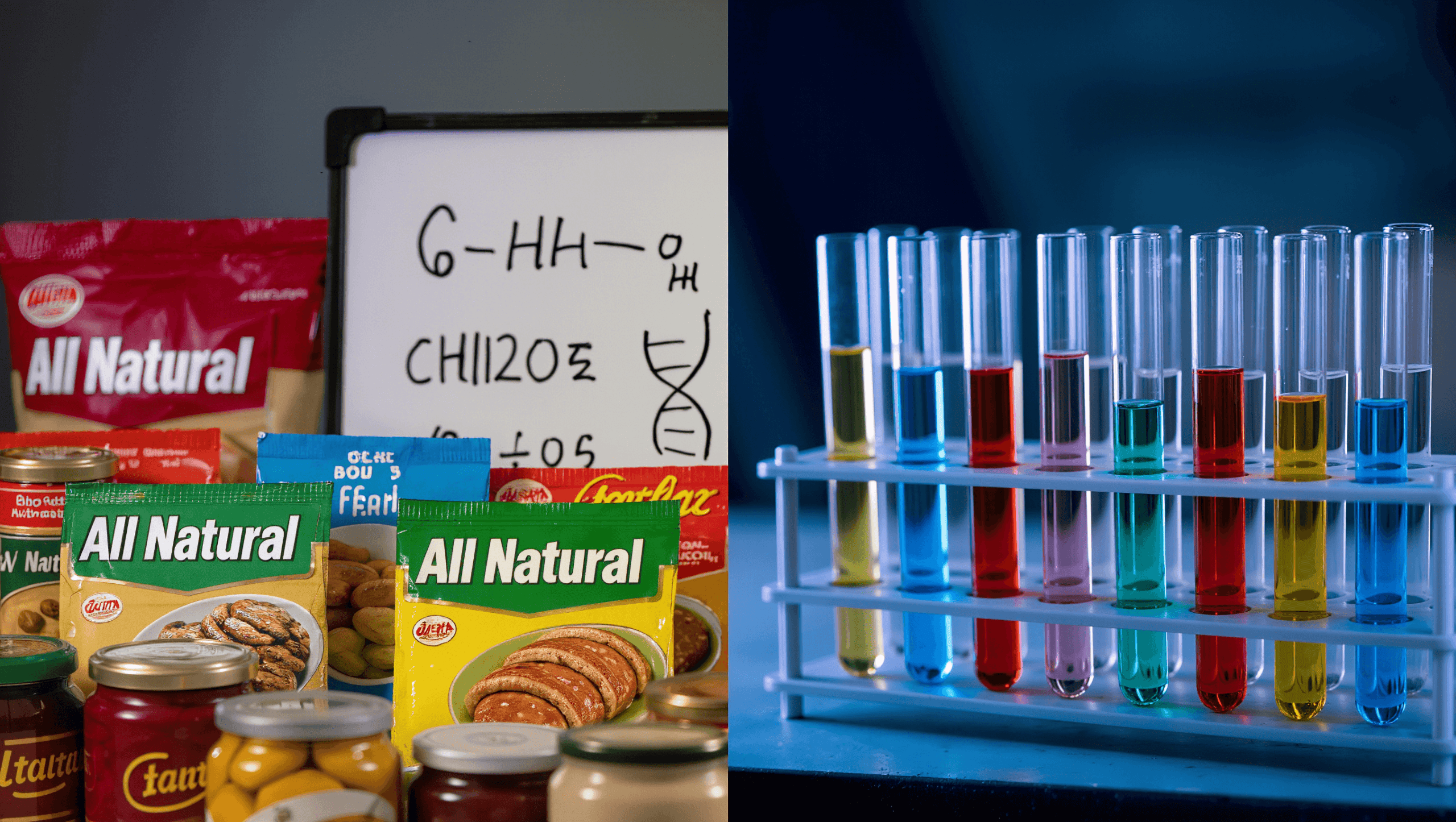
You pick up a box of crackers at the grocery store. The front of the package screams “All Natural!” and “No Artificial Ingredients!” You flip it over to check the ingredient list, and there it is near the end: “natural flavors.”
Sounds harmless enough, right? Natural must mean it comes from nature—fruits, vegetables, herbs. It’s certainly better than artificial flavors. That’s what the food industry wants you to think.
The same vague term appears in children’s vitamins—even the organic and vegan versions parents trust. You’ll see “natural flavors” listed without any disclosure of what those ingredients actually are. Parents assume they’re protecting their kids by buying premium supplements, but that two-word phrase hides the same ambiguity found in processed snacks.
Here’s the reality: “Natural flavors” is one of the most deceptive terms on food labels. According to research on food labeling, natural flavors are currently the fourth most common food ingredient listed on product labels (Goodman, 2017). It’s a catch-all phrase that allows manufacturers to hide dozens of chemical compounds without telling you what they actually are. The FDA permits this vague labeling, and food companies exploit it.
Let me show you what you’re really consuming when you see those two innocent-looking words.
Before diving into natural flavors, if you haven’t read our article on 10 Harmful Food Additives Hiding in Your Pantry, check it out first. Natural flavors often work alongside the toxic additives we exposed there—like Red Dye 40, Yellow 5, and artificial sweeteners.
What Are “Natural Flavors”?
According to FDA regulations codified in 21 CFR 101.22, natural flavors are defined as “the essential oil, oleoresin, essence or extractive, protein hydrolysate, distillate, or any product of roasting, heating or enzymolysis” derived from plant or animal sources including spices, fruits, vegetables, herbs, bark, roots, meat, seafood, poultry, eggs, and dairy products (Code of Federal Regulations, 2024; Goodman, 2017).
Sounds natural so far. But here’s the catch: these “natural” sources undergo extensive chemical processing in laboratories. Scientists extract, distill, and manipulate compounds using solvents and synthetic processing aids. The final product bears little resemblance to anything you’d recognize from nature (Goodman, 2017).
A single “natural flavor” can contain 50 to 100 different chemical ingredients (Environmental Working Group, 2024). The food industry isn’t required to disclose what those ingredients are. They can hide the entire chemical cocktail behind those two words: natural flavors.
Why Food Companies Use Natural Flavors
Food manufacturers love natural flavors for three reasons: cost, consistency, and consumer perception.
Real ingredients are expensive and inconsistent. Strawberries taste different depending on the season, the soil, and the weather. Natural strawberry flavor tastes exactly the same every single time, costs less than real strawberries, and lasts longer on the shelf.
The marketing advantage is enormous. Companies can plaster “All Natural” across their packaging while using laboratory-created compounds. Consumers assume they’re getting real food ingredients when they’re actually consuming synthesized chemicals.
Natural flavors also intensify taste in ways real food cannot. These concentrated compounds hit your taste buds harder than actual fruits or vegetables ever could. This creates stronger cravings and makes you want to eat more. It’s not an accident—it’s food science designed to keep you reaching for the bag.
The Betrayal of Trust
I learned this the hard way in my late teens. I trusted that food regulators had our best interest at heart—after all, unsafe food wouldn’t be allowed on shelves, right? But when I started researching vague terms like “natural flavors,” I discovered that trust was misplaced.
The people making these labeling decisions prioritize industry profits over consumer health. They create loopholes that allow deceptive marketing while technically staying within legal boundaries. Reading between the lines on food labels became essential for protecting my health.
What’s Really Hiding in Natural Flavors
Here’s what food companies don’t want you to know: natural flavors can contain the same harmful food additives found in ultra-processed foods. Many of these are the same ingredients we covered in our post on harmful food additives.
MSG (Monosodium Glutamate)
Natural flavors frequently contain glutamic acid, which functions identically to MSG in your body. It is widely believed that any product containing “natural flavors” on its ingredient list may be a hidden name for MSG, as the FDA does not require disclosure of components and amounts of “natural flavors” (MaryRuth Organics, 2024). Companies use natural flavors to hide MSG without listing it by name. If you’re sensitive to MSG, natural flavors likely trigger the same reactions—headaches, digestive issues, and brain fog (Baad-Hansen et al., 2010).
Allergens
Natural flavors derived from milk, soy, wheat, or nuts can trigger allergic reactions. The manufacturer isn’t required to specify the source unless it’s one of the top eight major allergens. Even then, the disclosure requirements have loopholes. People with sensitivities to ingredients outside the top eight have no way of knowing what they’re consuming.
Propylene Glycol
This petroleum-derived solvent is commonly used as a carrier for natural flavors. It’s the same ingredient found in antifreeze and industrial applications. The FDA considers it “generally recognized as safe” in small amounts, but it accumulates when you consume multiple products containing natural flavors throughout the day.
Preservatives
BHA and BHT, both linked to potential health concerns, are often added to natural flavors to extend shelf life. These preservatives don’t appear in the main ingredient list because they’re components of the natural flavor itself.
The Food and Drug Administration allows all of this because these compounds meet the technical definition of coming from “natural sources” at some point in their creation. It doesn’t matter how many chemical processes they undergo afterward.
Natural Flavors vs. Artificial Flavors
Here’s something that might surprise you: natural flavors and artificial flavors are often chemically identical (Goodman, 2017). The only difference is the original source material.
Artificial flavors are synthesized entirely in laboratories without starting from a plant or animal source. Natural flavors start from something that was once living, then undergo chemical processing. The end result in both cases is a laboratory-created compound designed to taste like something it’s not.
In some cases, artificial flavors are actually safer. At least you know they’re completely synthetic. Natural flavors deceive you into thinking you’re consuming something closer to real food when you’re not.
Both types are engineered to be more intense than real food flavors. This trains your taste buds to prefer hyper-flavored processed foods over the subtle tastes of actual fruits, vegetables, and whole foods. Over time, real strawberries taste bland compared to “natural strawberry flavor.” This is precisely what food manufacturers want—consumers dependent on their products.
The Transparency Problem
Manufacturers exploit vague terms to hide what’s really in their products. Consumers make purchasing decisions based on incomplete and misleading information.
This intentional ambiguity makes it nearly impossible for people with food sensitivities to identify their triggers. Someone reacting to a product containing “natural flavors” has no way to determine which of the 50-100 possible ingredients caused the problem. They’re left playing a frustrating guessing game with their health.
The Eden Health Guide addresses this issue directly in its discussion of food transparency and Pillar 7: Gratitude Practice. How can you practice true gratitude for your food when you don’t know what you’re actually eating? Transparency is foundational to making informed choices that honor your body and align with your values.
How to Identify and Avoid Natural Flavors
Start by reading every ingredient list on packaged foods. If you see “natural flavors” listed, ask yourself: Why does this product need added flavoring? Whole foods taste good on their own. Products requiring flavor enhancement are usually heavily processed.
Download the NutraDetective app and scan products before buying them. The app identifies natural flavors in the ingredient analysis and helps you understand what you’re really consuming. You’ll quickly see how prevalent this deceptive ingredient is across nearly every category of processed food.
Choose products with specific flavoring ingredients instead of vague terms. “Vanilla extract” tells you exactly what you’re getting. “Natural vanilla flavor” could contain dozens of undisclosed chemicals. The more specific the ingredient list, the more transparent the company.
Cook with real ingredients whenever possible. Fresh herbs, real vanilla beans, actual fruit—these provide genuine flavor without the chemical processing. Making food from scratch gives you complete control over what goes into your body.
When you do buy packaged foods, prioritize brands committed to full ingredient disclosure. Some companies voluntarily list everything in their natural flavors.
Taking Action Today
The food industry profits when you remain confused and trusting. They count on consumers not reading labels carefully or questioning vague terminology. Don’t let deceptive marketing make decisions for your health.
Make an effort to examine your pantry today. Pull out five products containing “natural flavors.” Research those brands. Do they disclose what’s actually in their natural flavors? If not, consider whether those products deserve space in your kitchen.
The Eden Health Guide provides a comprehensive framework for evaluating food through its 7 Pillars approach, including detailed guidance on avoiding ultra-processed ingredients that hide behind terms such as “natural flavors.” This resource helps you build the knowledge and confidence to make choices aligned with genuine food transparency.
Real food doesn’t need flavor engineering. It doesn’t require laboratory processing to taste good. When you eliminate products hiding behind vague terms such as “natural flavors,” you’ll rediscover what actual food tastes like. Your taste buds will adjust, your cravings will change, and your body will thank you.
You deserve to know exactly what you’re eating. Don’t settle for anything less than complete transparency.
Want to learn more about what else is hiding in your food? Read our complete guide to 10 Harmful Food Additives Hiding in Your Pantry to discover other deceptive ingredients you should avoid.
References
Baad-Hansen, L., Cairns, B., Ernberg, M., & Svensson, P. (2010). Effect of systemic monosodium glutamate (MSG) on headache and pericranial muscle sensitivity. Cephalalgia, 30(1), 68-76. https://doi.org/10.1111/j.1468-2982.2009.01881.x
Code of Federal Regulations. (2024). Title 21, Section 101.22: Foods; labeling of spices, flavorings, colorings and chemical preservatives. U.S. Food and Drug Administration. https://www.accessdata.fda.gov/scripts/cdrh/cfdocs/cfcfr/CFRSearch.cfm?fr=101.22
Environmental Working Group. (2024). What are natural flavors, really? https://www.ewg.org/foodscores/content/natural-vs-artificial-flavors
Goodman, M. J. (2017). The “natural” vs. “natural flavors” conflict in food labeling: A regulatory viewpoint. Food and Drug Law Journal, 72(1), 78-102. https://pubmed.ncbi.nlm.nih.gov/29140655/
MaryRuth Organics. (2024). What is MSG & is it safe to consume? https://www.maryruthorganics.com/blogs/supplements-nutrition/what-is-msg-is-msg-safe-to-consume
U.S. Food and Drug Administration. (2024). Questions and answers on monosodium glutamate (MSG). https://www.fda.gov/food/food-additives-petitions/questions-and-answers-monosodium-glutamate-msg
Frequently Asked Questions
A. Technically yes, but misleadingly so. Natural flavors must start from plant or animal sources, but they undergo extensive chemical processing in laboratories using solvents and synthetic processing aids. A single “natural flavor” can contain 50-100 different chemical compounds that don’t have to be disclosed.
A. Natural and artificial flavors are often chemically identical. The only difference is the original source material. Natural flavors start from something once living, then undergo chemical processing. Artificial flavors are synthesized entirely in labs. Both are laboratory-created compounds designed to be more intense than real food.
A. Yes. Natural flavors frequently contain glutamic acid, which functions identically to MSG in your body. The FDA doesn’t require disclosure of components in “natural flavors,” so companies use this term to hide MSG without listing it by name. If you’re sensitive to MSG, natural flavors likely trigger the same reactions.
A. Yes, they can. Natural flavors derived from milk, soy, wheat, or nuts can trigger allergic reactions. Manufacturers aren’t required to specify the source unless it’s one of the FDA’s top eight major allergens, and even then there are loopholes. People with sensitivities outside the top eight have no way of knowing what they’re consuming.
A. Read every ingredient list carefully. Look for specific ingredients instead of vague terms—”vanilla extract” is transparent, while “natural vanilla flavor” hides chemicals. Choose products with short, recognizable ingredient lists. Cook with real ingredients (fresh herbs, real vanilla beans, actual fruit) whenever possible. Use the NutraDetective app to scan products before buying.
A. Three reasons: cost, consistency, and marketing. Real ingredients are expensive and taste different each season. Natural flavors cost less, taste identical every time, and last longer on shelves. Plus, companies can claim “All Natural” while using laboratory-created compounds, deceiving consumers into thinking they’re getting real food.