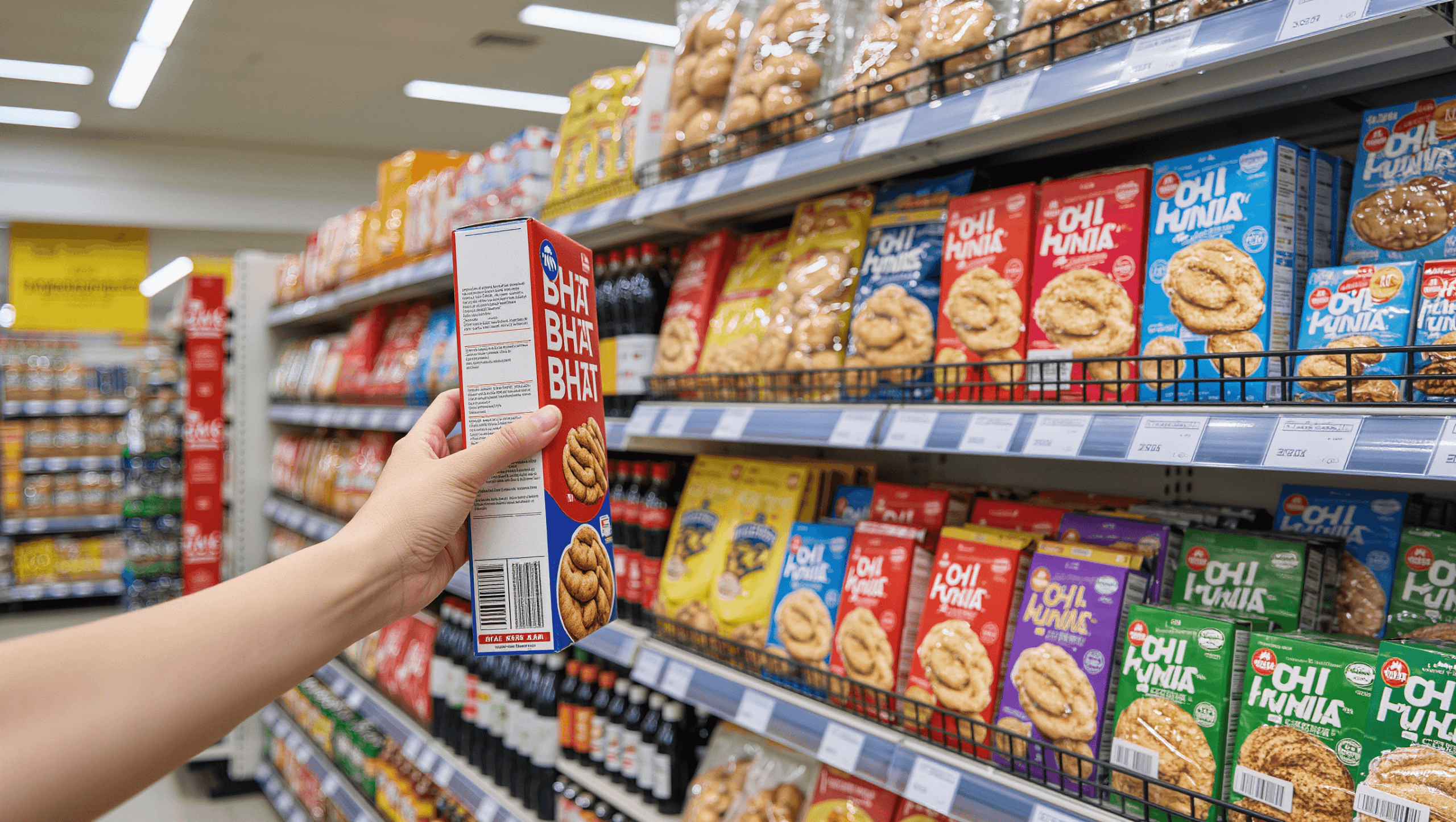
When Store-Bought Bread Acts More Like a Sponge
You’ve probably seen those viral videos where someone balls up store-bought bread and watches it slowly unfold on its own returning to shape just like a sponge. It’s unsettling to watch bread behave that way.
That elasticity isn’t just gluten. It’s a combination of preservatives and dough conditioners working together to create shelf-stable products that last weeks without molding.
I learned about preservatives the hard way. Several years ago, I started developing mysterious symptoms—swelling, severe itching, reactions that lasted for weeks. Allergy tests came back negative.
I started obsessively reading labels. Two ingredients kept appearing: citric acid and lactic acid. I’d always assumed those were just lemon juice—natural preservatives. Turns out, they’re lab-created using mold and GMO corn. That discovery changed everything. (You can read the full story in the Eden Health Guide, available free at NutraDetective.com.)
So which preservatives are actually safe, and which ones should be avoided? Here’s what to know about the preservatives in your pantry.
What Are Food Preservatives?
Food preservatives are ingredients added to prevent spoilage. They slow down mold growth, stop bacteria from multiplying, and keep your bread from turning green after three days.
Before refrigeration became standard, people preserved food with salt, vinegar, and smoke. These methods worked but changed the flavor significantly. Modern preservatives aim to extend shelf life without altering taste or texture as much.
There’s a balance here. Preservatives help reduce food waste and make food safer by preventing harmful bacteria. But some chemical preservatives come with health concerns that deserve attention. Not all preservatives are created equal, and knowing the difference matters.
Preservatives are just one category of food additives—colorants, emulsifiers, and flavor enhancers each have their own concerns. (I covered the most harmful additives across all categories in 10 Harmful Food Additives Hiding in Your Pantry.)
Natural vs. Chemical Preservatives
Labels can be confusing, especially since the word “natural” shows up everywhere without being well-regulated. The FDA allows manufacturers to use it pretty loosely, which is why “natural flavors” appears on so many ingredient panels without telling you what’s actually in them. (I wrote more about this in The Truth About “Natural Flavors” on Food Labels if you want the full breakdown.)
The line between “natural” and “chemical” isn’t always clear. Natural preservatives come from plants, animals, or minerals with minimal processing. Chemical preservatives are created in labs or heavily processed.
Natural preservatives include: salt, sugar, vinegar, rosemary extract, and vitamin E. These have been used for centuries and generally come with fewer health concerns.
Chemical preservatives are designed for maximum shelf life at minimal cost. They’re effective at stopping microbial growth, but some have been linked to health concerns ranging from digestive issues to more concerning health effects.
Heavy processing strips away nutrients and creates chemical structures our bodies don’t always recognize. When we can’t properly metabolize these altered compounds, they can accumulate and cause issues over time.
The gray area: Some ingredients sound natural but aren’t. Take citric acid. Citrus-derived citric acid is rare and expensive. Most citric acid in processed foods is industrial citric acid—manufactured in labs using black mold fed GMO corn sugar. It’s not the lemon juice or orange juice.
“Natural” on a label doesn’t always mean what you think it means.
Let’s look at some common preservatives you’ll encounter. These categories aren’t exhaustive, but they cover the preservatives you’re most likely to see on ingredient labels from ones to avoid to ones that are generally safer choices.
Preservatives to Avoid
Not all preservatives are created equal. Here are the ones worth avoiding when you can.
-
BHA (Butylated Hydroxyanisole) and BHT (Butylated Hydroxytoluene) – Found in cereals, chips, and baked goods to prevent fats from going rancid. The National Toxicology Program has raised concerns about BHA’s potential carcinogenic effects, and both have been linked to behavioral changes in animal studies (National Toxicology Program, 2021).
-
TBHQ (Tertiary Butylhydroquinone) – Another antioxidant preservative found in crackers, frozen foods, and cooking oils. Research has shown TBHQ can cause DNA damage and cellular toxicity at levels not far above what’s considered safe for consumption (Khezerlou et al., 2022; Esazadeh et al., 2024).
-
Sodium Benzoate and Potassium Benzoate – Common in sodas, salad dressings, and pickled foods. When combined with vitamin C (ascorbic acid), they can form benzene—a known carcinogen. They’ve also been associated with hyperactivity in children.
-
Nitrites and Nitrates (sodium nitrite, sodium nitrate) – Preserve processed meats and give them that pink color. When exposed to high heat during cooking, they can form nitrosamines—compounds linked to increased cancer risk, particularly colorectal cancer (Chazelas et al., 2022).
-
Propyl Paraben – Appears in baked goods and tortillas. Studies suggest it may disrupt hormone function and affect reproductive health (Nowak et al., 2018).
-
Sulfites (sulfur dioxide, sodium sulfite) – Used in dried fruits, wines, and some processed foods. While generally recognized as safe for most people, they can trigger severe reactions in those with asthma or sulfite sensitivity.
The connection between food additives and children’s behavior is well-documented. Learn more in Food Additives That Can Trigger ADHD Symptoms in Children.
Processed meats are particularly loaded with questionable preservatives.
Preservatives Generally Considered Safe
Some preservatives have been around forever and work just fine.
-
Salt, vinegar, and sugar – The oldest preservatives. They work by creating environments where bacteria and mold can’t thrive.
-
Rosemary extract – A natural antioxidant used in oils, meats, and baked goods. It’s extracted directly from the herb and carries minimal processing.
-
Cultured wheat flour and cultured rice flour – Fermentation-based preservatives that work by lowering pH or producing natural antimicrobial compounds. These rely on beneficial bacteria rather than synthetic chemicals.
The Gray Area: Read These Labels Carefully
Some preservatives sit in a murky middle ground. They’re not necessarily harmful in small amounts, but their sources and processing raise questions.
-
Ascorbic acid – Marketed as vitamin C, but most ascorbic acid used as a preservative is synthetically produced from GMO corn through chemical fermentation. It’s not the vitamin C from an orange, even if chemically similar.
-
Lactic acid – Sounds natural—it’s what gives yogurt and sauerkraut their tang. But commercial lactic acid is usually synthetically produced from corn starch or beet sugar, often from GMO sources. Naturally fermented lactic acid is fine—industrial versions deserve more scrutiny.
-
Tocopherols (vitamin E) – Prevent fats from going rancid and are often derived from vegetable oils—which typically means seed oils or GMO sources. The origin matters more than the name.
-
Industrial citric acid – Citrus-derived citric acid (the real kind) is rare and expensive. Most citric acid in processed foods is manufactured in labs using black mold fed GMO corn sugar. Research has documented inflammatory reactions linked to manufactured citric acid, particularly in individuals sensitive to mold compounds (Lerner & Matthias, 2018). The source matters here too.
Many of these gray-area preservatives come from GMO sources. To understand why that matters and how to avoid GMOs in your food, read GMO Foods List: What to Avoid at the Grocery Store.
When you see these ingredients, they’re not immediate red flags. But they’re not truly natural either, despite what the label implies.
Your Action Plan for Spotting Preservatives
Reading ingredient labels gets easier once you know what to look for. Here’s how to decode them quickly.
-
Look at ingredient order. Ingredients are listed by weight, heaviest first. If preservatives appear in the first five ingredients, that product is heavily preserved.
-
Watch for multiple preservatives. When a product lists three or four different preservatives, that’s a sign of heavy processing. Whole foods rarely need more than one.
-
Check for vague terms. “Natural flavors” can hide preservatives. “Spice extractives” and “natural antioxidants” are similarly vague. (Remember that natural flavors post? This is another reason why transparency matters.)
-
Use technology to your advantage. The NutraDetective app can scan barcodes and instantly identify problematic preservatives in products. It breaks down each ingredient and gives you a clear health rating, so you don’t have to memorize every chemical name or spend ten minutes in the grocery aisle researching.
If you want a deeper framework for evaluating food quality beyond just preservatives, the Eden Health Guide’s Plant Wisdom pillar offers practical guidance on avoiding ultra-processed foods (available free at NutraDetective.com).
Small shifts in what you buy add up over time. You don’t need to overhaul your entire pantry overnight—just start paying attention to what’s actually on those labels.
Conclusion
That sponge-like bread video makes a lot more sense now. The preservatives keeping it shelf-stable for weeks are the same ones worth questioning in your pantry.
My own journey started with mysterious symptoms and two ingredients I’d trusted without thinking—citric acid and lactic acid. Once I understood what they actually were, I couldn’t look at labels the same way.
You don’t need to memorize every chemical name. Just start noticing what’s there. Check ingredient order. Question products with multiple preservatives. And when in doubt, scan it.
Ready to see what’s hiding in your food? Download NutraDetective to instantly identify preservatives and get clear health ratings on any product.
References
Chazelas, E., Pierre, F., Druesne-Pecollo, N., Esseddik, Y., Szabo de Edelenyi, F., Agaesse, C., De Sa, A., Lutchia, R., Gigandet, S., Srour, B., Debras, C., Huybrechts, I., Julia, C., Kesse-Guyot, E., Allès, B., Galan, P., Hercberg, S., Deschasaux-Tanguy, M., & Touvier, M. (2022). Nitrites and nitrates from food additives and natural sources and cancer risk. International Journal of Epidemiology, 51(4), 1106-1119. https://doi.org/10.1093/ije/dyac046
Esazadeh, S., Mohtadinia, J., Karazhian, R., & Mousavi Khaneghah, A. (2024). Exploring the cytotoxic effects of tert-butylhydroquinone (TBHQ). Toxicology Reports, 12, 340-348. https://doi.org/10.1016/j.toxrep.2024.02.007
Khezerlou, A., Alizadeh-Sani, M., Azizi-Lalabadi, M., & Ehsani, A. (2022). Neurotoxicity, hepatotoxicity, nephrotoxicity, and carcinogenicity of tert-butylhydroquinone. Toxicology Research, 11(4), 647-659. https://doi.org/10.1093/toxres/tfac036
Lerner, A. H., & Matthias, T. (2018). Potential role of the common food additive manufactured citric acid in eliciting significant inflammatory reactions. Toxicology Reports, 5, 808-812. https://doi.org/10.1016/j.toxrep.2018.08.002
National Toxicology Program. (2021). Report on Carcinogens, Fifteenth Edition: Butylated Hydroxyanisole. U.S. Department of Health and Human Services. https://ntp.niehs.nih.gov/whatwestudy/assessments/cancer/roc
Nowak, K., Ratajczak-Wrona, W., Górska, M., & Jabłońska, E. (2018). Parabens and their effects on the endocrine system. Molecular and Cellular Endocrinology, 474, 238-251. https://doi.org/10.1016/j.mce.2018.03.014
Frequently Asked Questions
A. The most harmful preservatives include BHA, BHT, TBHQ, sodium benzoate, nitrites and nitrates, propyl paraben, and sulfites. These have been linked to various health concerns including potential carcinogenic effects, DNA damage, hormone disruption, and hyperactivity in children.
A. Natural preservatives come from plants, animals, or minerals with minimal processing—like salt, vinegar, and rosemary extract. Chemical preservatives are created in labs or heavily processed for maximum shelf life at minimal cost. However, the term “natural” isn’t well-regulated, so some ingredients that sound natural are actually lab-created.
A. It depends on the source. Citrus-derived citric acid is rare and generally safe. However, most citric acid in processed foods is industrial citric acid—manufactured using black mold fed GMO corn sugar. Research has linked manufactured citric acid to inflammatory reactions in some individuals, particularly those sensitive to mold compounds.
A. When nitrites and nitrates are exposed to high heat during cooking, they can form nitrosamines—compounds linked to increased cancer risk, particularly colorectal cancer. These preservatives also give processed meats their pink color and extended shelf life.
A. Look at ingredient order—preservatives in the first five ingredients indicate heavy preservation. Watch for multiple preservatives in one product, which signals heavy processing. Be cautious of vague terms like “natural flavors” or “natural antioxidants” that can hide preservatives. Using an app like NutraDetective can instantly identify problematic ingredients.
A. No. Some preservatives have been used safely for centuries, including salt, vinegar, sugar, and rosemary extract. Fermentation-based preservatives like cultured wheat flour are also generally safe. The concern is with synthetic chemical preservatives that have been linked to health issues in research studies.
A. That sponge-like elasticity comes from a combination of preservatives and dough conditioners designed to keep bread shelf-stable for weeks without molding. These additives create an unnatural texture that real homemade bread doesn’t have—a visible sign of heavy processing.