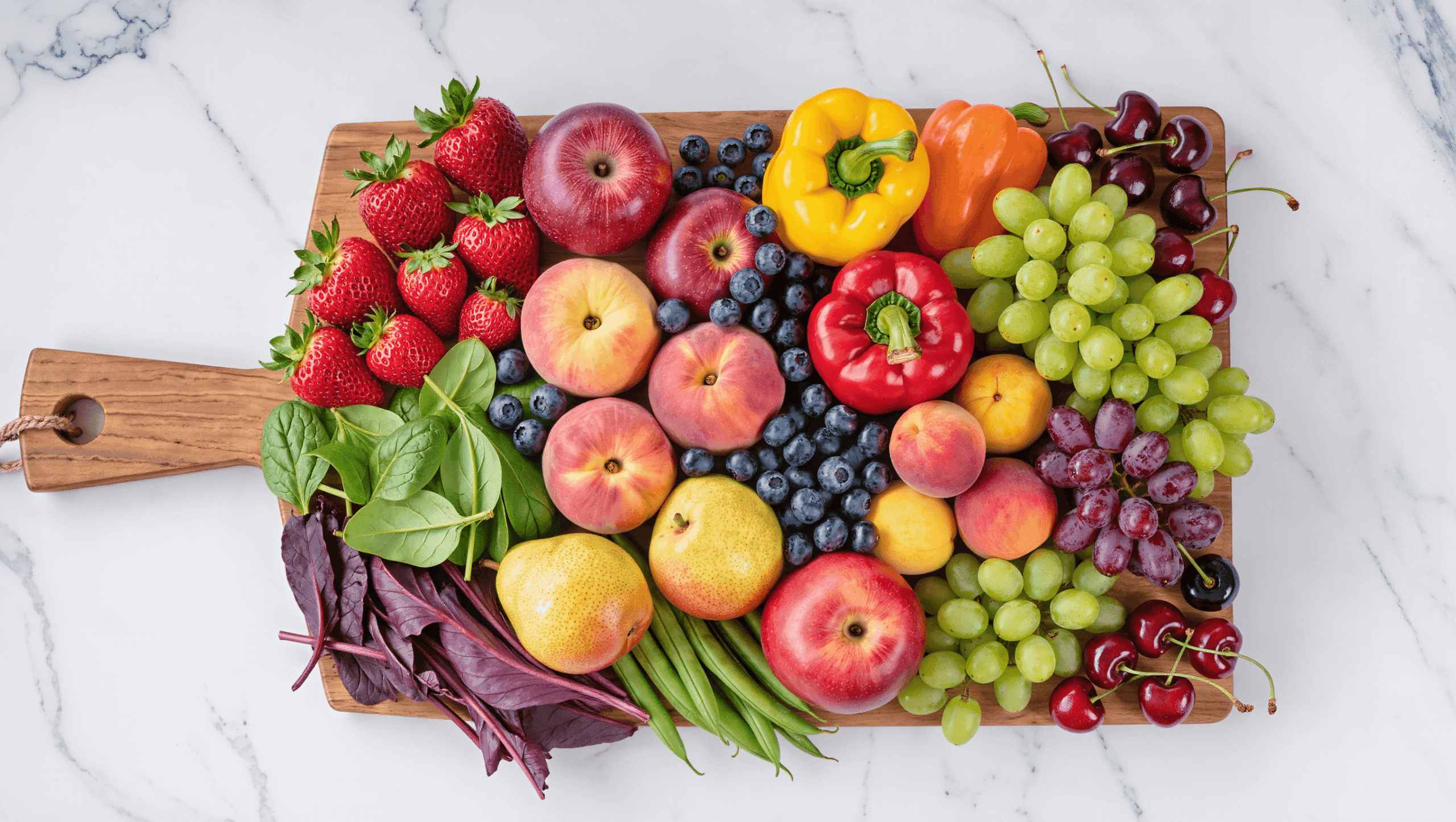
My Strawberry Wake-Up Call: Discovering the Dirty Dozen
Strawberries make me think of my mom.
We had them around often when I was growing up, but they felt special. We’d chop fresh strawberries and mix them with whipped cream—simple, but delicious. My favorite was buying those rectangular pound cakes from the grocery store. I knew what was coming next. We’d spread our strawberry mixture on thinly sliced cake and make our own strawberry shortcakes. I can still smell and taste it now.
I love food, so when I grew older, I started experimenting. Strawberries in green salads with vinaigrette. Strawberries blended into smoothies. I felt health-conscious—someone who cared about what I ate.
But then wow. All this time I thought I was being a conscious eater… yet strawberries are on THAT list.
About five years ago, I stumbled across something online—I don’t even remember what I was searching for—but I discovered the Dirty Dozen. It’s a list of fruits and vegetables with the highest pesticide residues. Strawberries? Number one.
I wasn’t exactly surprised that certain produce carried more pesticides than others. But I felt something shift. I started wondering: Had all those pesticides caused some of my health issues? I was already buying organic. Already cleaning my produce with vinegar. But this discovery made me realize there was more to learn.
If you’re just starting to learn about hidden chemicals in your food, our guide to 10 Harmful Food Additives Hiding in Your Pantry is a great place to begin.
Let me explain what I discovered.
What Is the Dirty Dozen?
The Dirty Dozen represents the produce with the highest, most concentrated pesticide residues. These are the items where choosing organic makes the biggest difference.
Every year, the Environmental Working Group (EWG) releases this list, ranking fruits and vegetables by pesticide contamination levels. They analyze thousands of samples from the U.S. Department of Agriculture’s pesticide testing program (Temkin et al., 2025).
Here’s how it works: The USDA collects produce samples from grocery stores and farmers markets across the country. Before testing, they wash and scrub the produce the same way you would at home. Then they test for pesticide residues.
The results? Just over 75% of non-organic fruits and vegetables had detectable pesticide residues, even after washing (Temkin et al., 2025). Some samples contained traces of multiple pesticides—one strawberry sample alone tested positive for 22 different chemicals.
Studies found detectable pesticide residues in 46% of conventional produce samples, compared to only 11% of organic samples (Barański et al., 2014). When you eat high-residue produce regularly, those pesticides accumulate in your body. People who consumed more fruits and vegetables with higher pesticide residues had significantly higher levels of pesticides detected in their urine (Temkin et al., 2025).
Your daily food choices directly affect your pesticide exposure.
The Dirty Dozen List
Here’s the current list, ranked from highest to lowest pesticide contamination:
-
Strawberries – Consistently the most contaminated produce tested
-
Spinach – High levels of multiple pesticide residues
-
Kale, Collard & Mustard Greens – Over 90% of samples tested positive
-
Peaches – Thin skin allows pesticide absorption
-
Pears – Multiple pesticide types detected
-
Nectarines – Similar contamination patterns to peaches
-
Apples – Up to a dozen pesticides found per sample
-
Grapes – Both domestic and imported varieties
-
Bell & Hot Peppers – Contain traces of highly toxic pesticides
-
Cherries – High pesticide concentrations due to pest vulnerability
-
Blueberries – Increasing pesticide use in recent years
-
Green Beans – Often treated with pesticides banned in Europe
When I saw strawberries at the top of this list, it hit differently. Those weren’t just statistics. They represented every strawberry shortcake from my childhood. Every smoothie I’d blended as an adult thinking I was making a healthy choice.
The EWG updates this list annually based on the latest USDA testing data (Temkin et al., 2025). The rankings can shift slightly from year to year, but these twelve items consistently show the highest pesticide residues.
Why Pesticide Residues Matter for Your Health
Pesticides aren’t designed to be harmless. They’re created to kill living organisms—insects, weeds, fungi. When we consume them regularly, even in small amounts, they affect our bodies too.
Research links pesticide exposure to several health concerns, including reproductive health effects, hormonal disruption, developmental impacts in children, increased cancer risk, and neurological concerns (Ma et al., 2025). Pregnant women and young children face the highest risk because pesticides can cross the placental barrier and affect developing systems.
Some pesticides act as endocrine disruptors. They interfere with hormones that regulate everything from metabolism to brain development.
Pesticides aren’t the only chemicals affecting children’s development. Learn how Food Additives Can Trigger ADHD Symptoms in Children.
Here’s what concerns me most: these studies typically look at one pesticide at a time. But we’re exposed to multiple pesticides simultaneously through our food. Nobody really knows what happens when our bodies process ten different pesticides from a single meal.
Washing helps remove surface pesticides. But systemic pesticides—the ones absorbed into the plant tissue during growth—can’t be washed away (Yang et al., 2017). That’s why choosing organic for the Dirty Dozen matters. You’re not just cleaning the outside. You’re potentially avoiding pesticides that penetrated the food itself.
Children and pregnant women need extra caution. Their bodies are more vulnerable to the effects of pesticide consumption.
How I Clean My Produce to Remove Pesticides
I have a memory of my grandmother cleaning leafy greens with salt and vinegar. She’d soak them, rinse thoroughly, and repeat until they were clean. It seems unthinkable now, but for years I just used soap and water on my produce. That’s what I thought was right.
Then that memory resurfaced. I started soaking my leafy greens the same way my grandmother did—salt or vinegar, rinse, repeat. But here’s what didn’t occur to me: why wasn’t I doing this for all my produce?
About ten years ago, I started using vinegar more broadly. Then five years ago, after discovering the Dirty Dozen, I added baking soda to my routine. Research shows baking soda is the most effective method for removing surface pesticide residues—more effective than tap water or even bleach solutions (Yang et al., 2017).
Here’s what I do now, depending on what I’m cleaning:
Baking Soda Method: Mix one teaspoon of baking soda per two cups of water. Soak produce for 12-15 minutes. Rinse thoroughly under running water. This works especially well for apples, strawberries, and other fruits with smooth or slightly textured skin.
Vinegar Method: Mix one part vinegar to three parts water. Soak for 5-10 minutes. Rinse thoroughly. I often use this for leafy greens, following my grandmother’s wisdom.
Double Method: For Dirty Dozen items, I sometimes use both. First the baking soda soak, then a final rinse with diluted vinegar.
Remember what I mentioned earlier: these methods remove surface pesticides effectively. But they can’t eliminate pesticides that were absorbed into the plant during growth. That’s why buying organic for the Dirty Dozen remains important.
Strategic Organic Shopping on Any Budget
Buying organic for everything isn’t realistic for most families. It doesn’t have to be.
The Dirty Dozen gives you a strategic approach: prioritize your organic purchases where they matter most. Buy organic for these twelve items. For produce not on the Dirty Dozen list, conventional is an acceptable choice.
Here are a few quick ways to make organic more affordable. Shop frozen organic produce—it costs significantly less than fresh and works perfectly for smoothies. Buy in season when prices drop naturally. Check discount grocery stores such as Aldi, Trader Joe’s, and Costco for affordable organic options.
Beyond produce, packaged foods contain hidden ingredients that can harm your family. Learn what to watch for in our guide to 10 Harmful Food Additives Hiding in Your Pantry.
The Eden Health Guide (available free at NutraDetective.com) offers a complete framework for transitioning to organic eating without breaking your budget, including detailed shopping strategies, store comparisons, and meal planning approaches that make clean eating accessible. The Guide’s Earth Honor pillar specifically addresses how to prioritize organic purchases based on your family’s needs.
The goal isn’t perfection. The goal is progress.
Your Dirty Dozen Shopping Strategy
Five years ago, I stood in a grocery store holding strawberries and wondering how many chemicals I’d consumed without knowing. That awareness changed everything—not overnight, but gradually.
You don’t need to overhaul your entire kitchen this weekend. Start with what matters most.
Look at the Dirty Dozen list. Which three items does your family eat regularly? Maybe it’s apples in lunch boxes, spinach in smoothies, or strawberries on weekend pancakes. Make those three organic. Three strategic swaps that reduce pesticide exposure significantly.
Keep the list handy. Save it on your phone or print it for your wallet. When you’re standing in the produce section trying to remember if peppers made the list, you’ll know immediately. No guessing. No second-guessing your budget priorities.
Reading labels goes beyond produce. Discover how manufacturers hide ingredients behind vague terms in our article on The Truth About “Natural Flavors” on Food Labels.
The NutraDetective app gives you instant answers while you shop. Scan any product’s barcode and see its ingredient breakdown and health score right there in the aisle. It takes the confusion out of label reading and puts transparency in your hands.
For the complete picture—including budget strategies, meal planning with organic produce, and the biblical framework behind food stewardship—the Eden Health Guide is available free at NutraDetective.com. The Earth Honor pillar walks you through exactly how to protect your family from pesticide exposure without financial stress.
Learn more about our mission for food transparency in Why We Built NutraDetective: A Food Scanner App for Ingredient Analysis.
This journey isn’t about fear. It’s about awareness. It’s about making informed choices when you can and extending yourself grace when you can’t.
Start paying attention. Start asking questions. Your body is worth it.
References
Barański, M., Srednicka-Tober, D., Volakakis, N., Seal, C., Sanderson, R., Stewart, G. B., … & Leifert, C. (2014). Higher antioxidant and lower cadmium concentrations and lower incidence of pesticide residues in organically grown crops: A systematic literature review and meta-analyses. British Journal of Nutrition, 112(5), 794-811. https://doi.org/10.1017/S0007114514001366
Ma, Y., Qian, M., Shi, H., Jin, X., Huang, K., Tong, C., Ma, J., Wu, L., & Liu, J. (2025). Prenatal pesticide exposure and adverse reproductive outcomes: Epidemiological evidence and mechanistic insights. Journal of Hazardous Materials, 494, 138792. https://doi.org/10.1016/j.jhazmat.2025.138792
Temkin, A. M., et al. (2025). Associations between dietary intake of fruits and vegetables with higher pesticide residues and urinary pesticide biomarkers in the U.S. population. International Journal of Hygiene and Environmental Health, 263.
Yang, T., Doherty, J., Zhao, B., Kinchla, A. J., Clark, J. M., & He, L. (2017). Effectiveness of commercial and homemade washing agents in removing pesticide residues on and in apples. Journal of Agricultural and Food Chemistry, 65(44), 9744-9752. https://doi.org/10.1021/acs.jafc.7b03118
Frequently Asked Questions
A. The Dirty Dozen is an annual list published by the Environmental Working Group (EWG) ranking the twelve fruits and vegetables with the highest pesticide residues. The list is based on USDA testing of thousands of produce samples from grocery stores across the country. These are the items where buying organic makes the biggest difference for reducing pesticide exposure.
A. Strawberries consistently rank number one because their soft, porous skin easily absorbs pesticides during growing. They also grow close to the ground and face heavy pest pressure, requiring more chemical treatments. One strawberry sample tested by the USDA contained 22 different pesticide residues.
A. Washing removes surface pesticides but cannot eliminate systemic pesticides that were absorbed into the plant tissue during growth. Research shows baking soda solutions are the most effective method for removing surface residues—more effective than tap water or commercial produce washes. However, for Dirty Dozen items, buying organic remains the best way to reduce exposure.
A. Yes, strategically buying organic for just the Dirty Dozen can significantly reduce your pesticide exposure without breaking your budget. Studies show organic produce contains pesticide residues four times less frequently than conventional produce. You can save money by buying conventional for Clean Fifteen items, which naturally have lower pesticide residues.
A. The most effective method is soaking produce in a baking soda solution—one teaspoon of baking soda per two cups of water for 12-15 minutes, then rinse thoroughly. For leafy greens, a vinegar solution (one part vinegar to three parts water) for 5-10 minutes works well. Remember that these methods only remove surface pesticides, not those absorbed into the plant.
A. Yes, children and pregnant women face the highest risk from pesticide exposure. Pesticides can cross the placental barrier and affect developing systems. Children also consume more food relative to their body weight than adults, increasing their exposure. Prioritizing organic Dirty Dozen items is especially important for families with young children.
A. The EWG updates the Dirty Dozen annually based on the latest USDA pesticide testing data. Rankings can shift slightly from year to year as growing practices change and testing protocols evolve. However, the same twelve items consistently show the highest pesticide residues year after year, with strawberries, spinach, and leafy greens regularly appearing at the top.