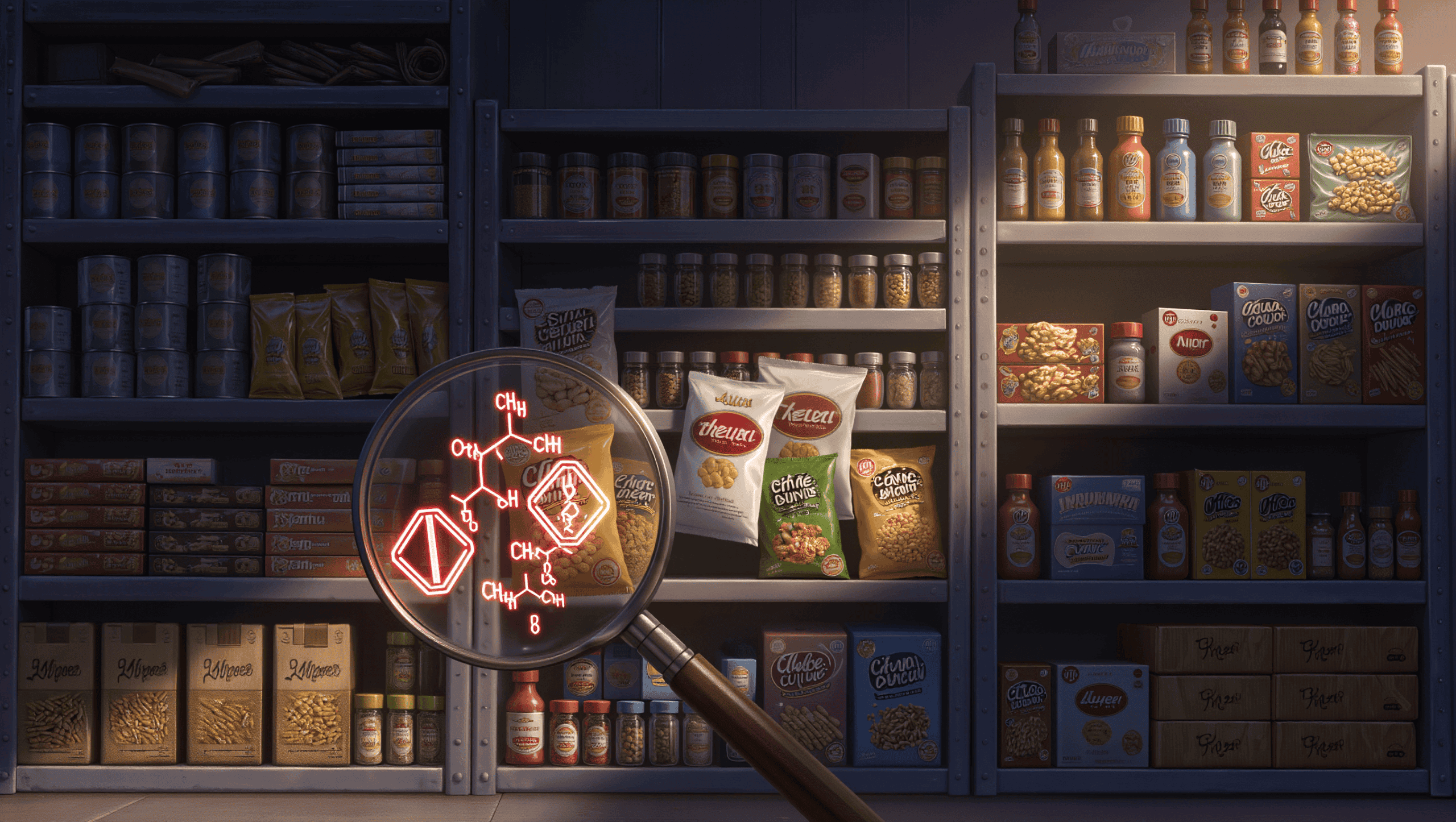
Have you ever flipped over a cereal box and wondered what half those ingredients actually are? You’re not alone. Most of us grab familiar brands from store shelves, trusting that what’s inside is safe for our families. But here’s the reality: many everyday products contain additives that raise serious health concerns.
Food manufacturers rely on additives to extend shelf life, enhance color, and improve texture. The problem is, many of these compounds have been linked to health issues ranging from hyperactivity in children to DNA damage. What’s even more concerning is that some of these additives are banned in other countries but remain perfectly legal in the United States.
Let’s examine 10 common food additives that might be sitting in your pantry right now.
1. Red Dye 40
This petroleum-based colorant shows up in cereals, candies, and even products marketed as “healthy” yogurts. Recent research found it causes DNA damage and gut inflammation in animal studies (Rasouli et al., 2023). Check your child’s brightly colored popsicle or fruit snacks. There’s a good chance Red Dye 40 is listed on the ingredient panel.
2. Yellow 5 & 6
These artificial dyes are linked to hyperactivity in children, which is exactly why the European Union requires warning labels on products containing them (Environmental Working Group, 2024). American manufacturers face no such requirement. These dyes appear in everything from mac and cheese to sports drinks, often without parents realizing the potential impact on their children’s behavior.
3. Titanium Dioxide
Here’s something that should concern you: this whitening agent was banned in Europe in 2022, yet it remains in your coffee creamer, ranch dressing, and frosting (U.S. Right to Know, 2025). We’re talking about nanoparticles being consumed regularly in everyday foods. The European Food Safety Authority deemed it unsafe, but American consumers continue to ingest it daily.
4. BHA & BHT
These preservatives keep your cereal crunchy, but they may increase cancer risk in high doses according to animal studies (GoodRx Health, 2024). You’ll find them in crackers, chips, and baked goods. The trade-off for extended shelf life might not be worth the potential health consequences.
5. High Fructose Corn Syrup (HFCS)
This sweetener isn’t just lurking in soda anymore. It hides in bread, pasta sauce, and salad dressing. Food manufacturers favor it because it’s cheaper than sugar and helps products stay moist longer. But research increasingly links high fructose corn syrup consumption to obesity, diabetes, and metabolic syndrome.
6. Artificial Sweeteners
The World Health Organization classified aspartame as “possibly carcinogenic” in 2023 (Center for Science in the Public Interest, 2025). Despite this classification, aspartame continues to sweeten diet sodas, sugar-free gum, and “light” yogurts across America. Other artificial sweeteners raise similar concerns, yet they’re marketed as healthier alternatives to sugar.
7. Nitrates and Nitrites
Your deli meats and bacon contain these preservatives, which can form cancer-causing compounds in your body (American Academy of Pediatrics, 2018). The American Academy of Pediatrics specifically warns parents about limiting children’s exposure to processed meats containing these additives. Every sandwich made with conventional deli meat exposes you to these compounds.
My Wake-Up Call: When Additives Became Personal
I learned this lesson the hard way. Several years ago, I started experiencing mysterious symptoms whenever I ate certain packaged foods. After extensive research and careful label reading, I discovered the culprits were ingredients I’d never paid attention to before. Additives I assumed were natural turned out to be laboratory-created compounds my body couldn’t tolerate.
The Eden Health Guide explores this phenomenon in depth, examining how synthetic additives affect our bodies differently than their natural counterparts. Sometimes the ingredients that sound harmless cause the most problems.
If you’re experiencing unexplained symptoms—headaches, digestive issues, skin reactions, brain fog, or energy crashes—food additives might be the hidden culprit. The Guide provides a complete framework for identifying trigger ingredients, understanding the 7 Pillars of food purity, and creating an elimination strategy that actually works.
Download the free Eden Health Guide at NutraDetective.com and discover which additives are sabotaging your health. You’ll get step-by-step protocols for cleaning out your pantry, reading labels like a detective, and making the switch to genuinely clean foods without feeling overwhelmed or breaking your budget.
8. Carrageenan
This seaweed extract sounds natural enough, right? It appears in almond milk, ice cream, and cottage cheese as a thickener. However, studies suggest carrageenan may trigger gut inflammation in sensitive individuals. The compound passes through your digestive system largely undigested, potentially causing irritation along the way.
9. Sodium Benzoate
This preservative is common in pickles and sodas. The real concern emerges when sodium benzoate combines with vitamin C, potentially forming benzene, a known carcinogen. Many beverages contain both ingredients, creating this problematic combination right in the bottle.
10. BPA and BPA Alternatives
Even “BPA-free” cans often contain similar chemicals that disrupt hormones (American Academy of Pediatrics, 2018). The American Academy of Pediatrics warns that these alternatives may be just as harmful as the original compound. Manufacturers replaced one problematic chemical with others that haven’t been adequately studied for long-term safety.
How to Eliminate Additives from Your Pantry
The most powerful step you can take is becoming an informed label reader. Download the NutraDetective app and start scanning products in your pantry right now. It instantly identifies problematic additives and gives you a clear health rating for each product. You’ll quickly discover which items need replacing and which ones are safe to keep.
Your pantry might need a serious audit, but you don’t have to overhaul everything overnight. Start by identifying your top five most-consumed packaged foods. Check their ingredient lists carefully. Replace items containing multiple additives from this list with cleaner alternatives.
Make an effort to choose whole foods whenever possible. Fresh fruits, vegetables, whole grains, and minimally processed proteins don’t contain mysterious additives. When you do buy packaged foods, look for products with ingredient lists you can actually understand.
Additional Resources for Clean Eating
For deeper support, the Eden Health Guide offers a comprehensive framework for evaluating food quality through its 7 Pillars approach, including Plant Wisdom, which specifically addresses avoiding ultra-processed foods and harmful additives. This resource provides practical strategies for transitioning away from additive-laden products without feeling overwhelmed.
Small changes compound over time. Every product you replace moves your family closer to better health. Knowledge is power, and you deserve to know exactly what you’re feeding your family. You’ve got this.
References
-
Rasouli, O., et al. (2023). “The synthetic food dye, Red 40, causes DNA damage, causes colonic inflammation, and impacts the microbiome in mice.” Nature Communications, 14(5758). https://doi.org/10.1038/s41467-023-41359-7
-
Environmental Working Group. (2024). “Unwrapping the risks of synthetic dyes and titanium dioxide in holiday treats.” https://www.ewg.org/news-insights/
-
U.S. Right to Know. (2025). “Titanium dioxide, banned in Europe, is one of the most common food additives in the U.S.” https://usrtk.org/chemicals/titanium-dioxide/
-
McCann, D., et al. (2007). “Food additives and hyperactive behaviour in 3-year-old and 8/9-year-old children in the community: a randomised, double-blinded, placebo-controlled trial.” The Lancet, 370(9598), 1560-1567.
-
World Health Organization. (2023). “Aspartame hazard and risk assessment results.” WHO/IARC Press Release.
National Institutes of Health. (2021). “14th Report on Carcinogens: Butylated Hydroxyanisole (BHA).” National Toxicology Program.
-
International Agency for Research on Cancer. (2015). “IARC Monographs evaluate consumption of red meat and processed meat.” Press Release No. 240.
-
Center for Science in the Public Interest. (2024). “Chemical Cuisine: Food Additive Safety Ratings.” https://www.cspi.org/page/chemical-cuisine
Frequently Asked Questions
A. The 10 most harmful additives are Red Dye 40, Yellow 5, Yellow 6, Titanium Dioxide, BHA, BHT, TBHQ, High Fructose Corn Syrup, Sodium Nitrite, and Aspartame. These are linked to hyperactivity, cancer risk, and metabolic disorders according to peer-reviewed research.
A. Red Dye 40 requires warning labels in the European Union stating u0022may have adverse effects on activity and attention in children.u0022 While not fully banned, many EU manufacturers removed it voluntarily. It’s completely banned in Norway and Austria.
A. Red Dye 40 is found in Froot Loops, Doritos, Skittles, Gatorade, strawberry Pop-Tarts, Jell-O, many yogurts marketed to children, and approximately 43% of products targeted at kids in grocery stores.
A. Studies show food dyes don’t cause ADHD but can worsen symptoms. The Lancet study (2007) found artificial colors increased hyperactivity by 10% in all children, not just those with ADHD. About 8% of children with ADHD show significant improvement when dyes are removed.
A. Yes. While both contain similar calories, HFCS is metabolized primarily by your liver (unlike glucose), leading to increased fat production, insulin resistance, and elevated triglycerides—a 2010 Princeton study showed rats fed HFCS gained 48% more weight than those fed regular sugar, even at identical calorie levels. The bigger problem is that HFCS hides in thousands of products where you’d never expect sweetener—bread, pasta sauce, crackers, bacon, and pickles—meaning you’re consuming far more than you realize, making the cumulative metabolic damage significantly worse than occasional table sugar use.
A. Look for: u0022FDu0026Cu0022 followed by colors and numbers (like FDu0026C Red 40), u0022artificial colors,u0022 u0022artificial flavors,u0022 BHA/BHT/TBHQ (preservatives), and ingredients ending in u0022-oseu0022 (hidden sugars). The NutraDetective app can scan barcodes to instantly identify these additives.
A. Organic foods cannot contain synthetic dyes, artificial flavors, or most preservatives. However, they can still contain natural additives and high amounts of sugar or sodium. Always check labels even on organic products.
A. Natural alternatives include beet juice (red), turmeric (yellow), spirulina (blue/green), paprika (orange), and purple sweet potato (purple). Look for products using these instead of synthetic dyes.