The federal government has never had an official definition of "ultra-processed food." That may be about to change.
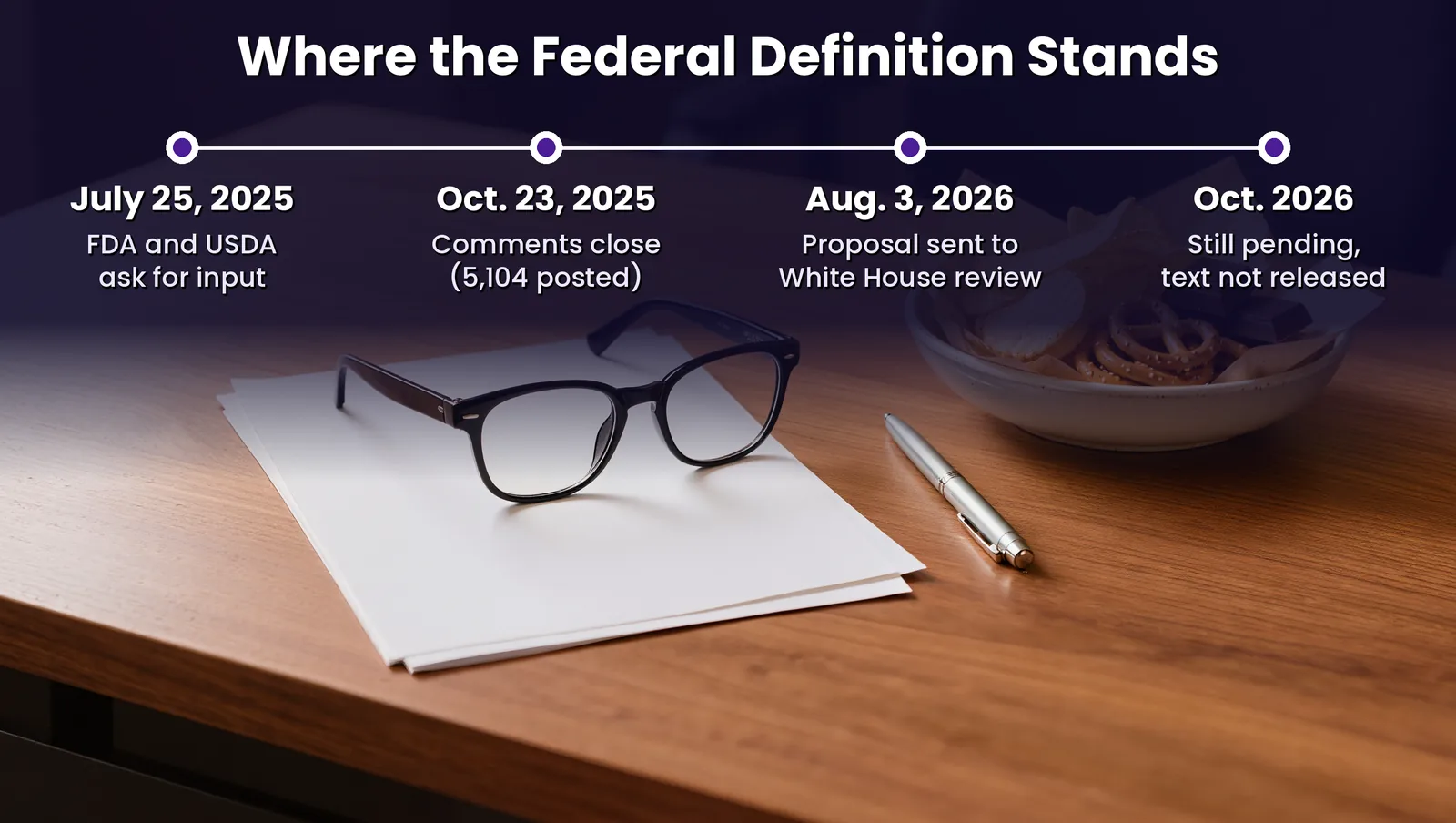
On August 10, 2026, HHS announced that it and the USDA had submitted the federal government's first proposed definition of ultra-processed foods for final review (U.S. Department of Health and Human Services [HHS], 2026b). The White House Office of Management and Budget (OMB) received it on August 3, 2026, and as of October 16, 2026, still listed it as pending review (Office of Information and Regulatory Affairs [OIRA], 2026a).
We read the government notices, the CDC's latest numbers and the main studies so you don't have to. Here is what the term means, where the definition stands, and how to spot ultra-processed foods on a label today.
What Are Ultra-Processed Foods?
The most common way to classify these foods is the NOVA system, developed by Brazilian researchers in 2009 (U.S. Food and Drug Administration [FDA] & U.S. Department of Agriculture [USDA], 2025a). NOVA groups foods by how much industrial processing they go through and for what purpose (Monteiro et al., 2019a). It sorts every food into one of four groups (Monteiro et al., 2019b):
- Unprocessed or minimally processed foods: the edible parts of plants and animals, such as fruit, seeds, meat, eggs and milk, plus fungi, algae and water.
- Processed culinary ingredients: kitchen staples such as oils, butter, lard, sugar and salt.
- Processed foods: made by adding salt, oil or sugar to whole foods, such as canned vegetables, simple cheeses and most freshly baked breads. Most have two or three ingredients.
- Ultra-processed foods: formulations made mostly from ingredients used only in industry, through a series of industrial processes.
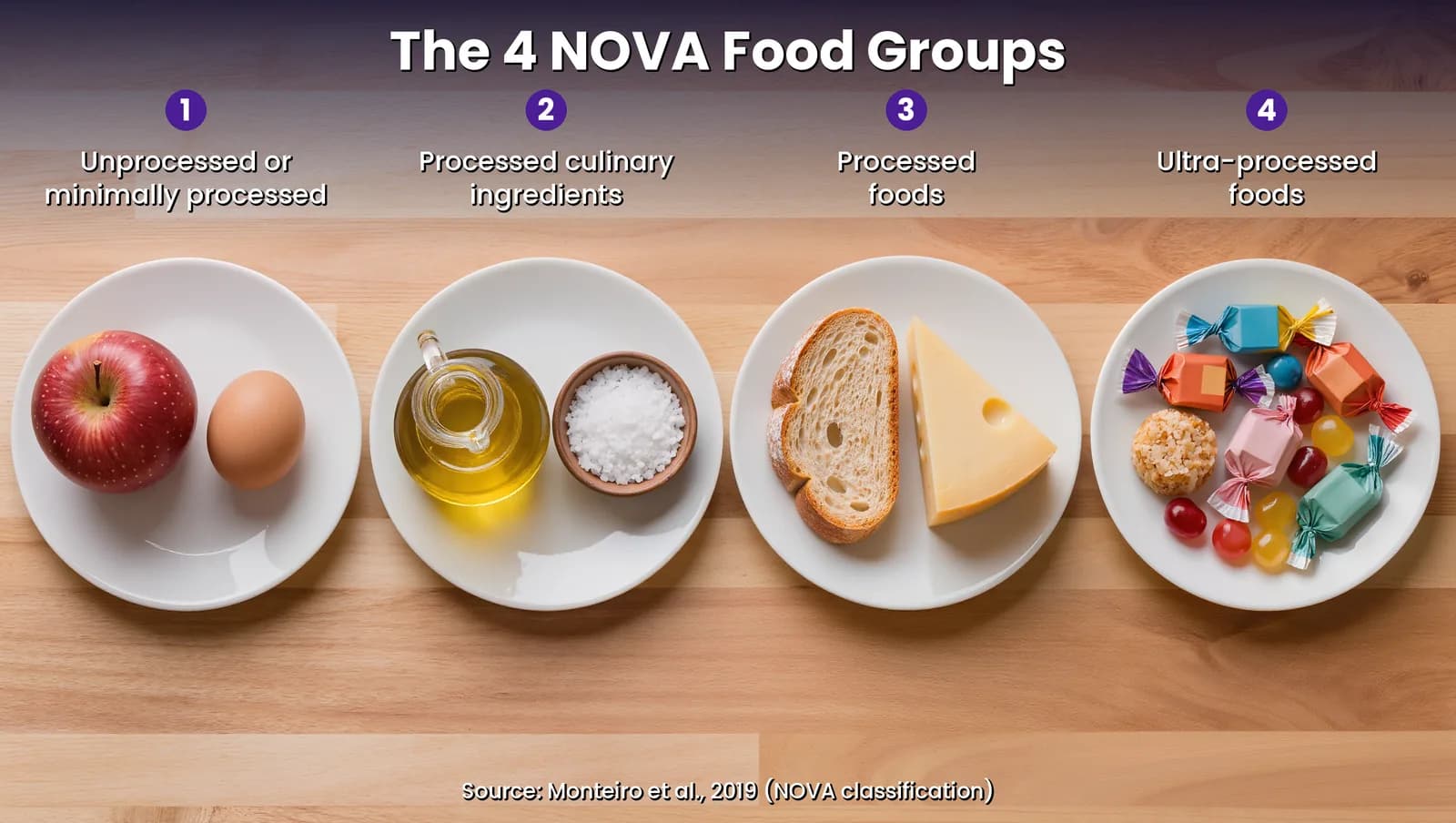
Common examples of ultra-processed foods include soft drinks, packaged snacks, candy, mass-produced packaged breads, cookies, cakes, sweetened breakfast cereals, nuggets, hot dogs and instant noodles (Monteiro et al., 2019b). Making them often means breaking whole foods into parts, chemically changing some of those parts, and putting them back together with methods like extrusion, molding and pre-frying (Monteiro et al., 2019b).
The CDC describes these foods as tending to be very palatable, calorie-dense, low in fiber and made with little or no whole food (Williams et al., 2025).
Where the Federal Definition Stands
July 2025: the government asked for input. On July 25, 2025, the FDA and USDA published a Request for Information asking for data to help build a single, uniform definition of ultra-processed foods (FDA & USDA, 2025a). The agencies acknowledged that there is no single, universally accepted definition, and said a shared one would make research and policy consistent (FDA & USDA, 2025a). They asked which ingredients, including flavors and colors, and which physical, biological and chemical processes should mark a food as ultra-processed (FDA & USDA, 2025a).
The notice also flagged a risk. Foods considered ultra-processed may also include whole grain products or yogurt, and the agencies said they should consider the unintended consequences of a definition so broad it could discourage people from eating beneficial foods (FDA & USDA, 2025a).
The comment deadline was extended to October 23, 2025 (FDA & USDA, 2025b), and the public docket shows 5,104 comments (Regulations.gov, 2026).
August 2026: a proposal went to the White House. OMB lists the document as "White Paper: Proposed Definition of Ultra-Processed Food," at the "Notice" stage (OIRA, 2026a). The agencies have called it a white paper, not a regulation, and as of October 13, 2026, its text had not been released (Greenberg Traurig, 2026).
OMB's calendar lists 24 meetings with outside parties about it, starting August 19, 2026. As of October 16, 20 were marked completed and 4 were marked scheduled, the last on October 19 (OIRA, 2026b).
What it could mean later. One law firm says the definition could eventually influence food labeling, school nutrition standards and food procurement, while the agencies have described it as a research-focused white paper (Greenberg Traurig, 2026). Separately, HHS says the Dietary Guidelines for Americans, 2025–2030, released in January 2026, call out the dangers of certain highly processed foods for the first time (HHS, 2026a).
California has already acted. The governor's office called AB 1264, signed October 8, 2025, the nation's first law defining ultra-processed foods (Office of Governor Gavin Newsom, 2025). California schools must start phasing out "ultraprocessed foods of concern" by July 1, 2029, and vendors may not offer them to schools starting July 1, 2032 (California Legislature, 2025).
How Much Ultra-Processed Food Americans Eat
From August 2021 to August 2023, ultra-processed foods made up 55% of the calories eaten by Americans age 1 and older (Williams et al., 2025). Children and teens got more of their calories from them (61.9%) than adults did (53.0%) (Williams et al., 2025).
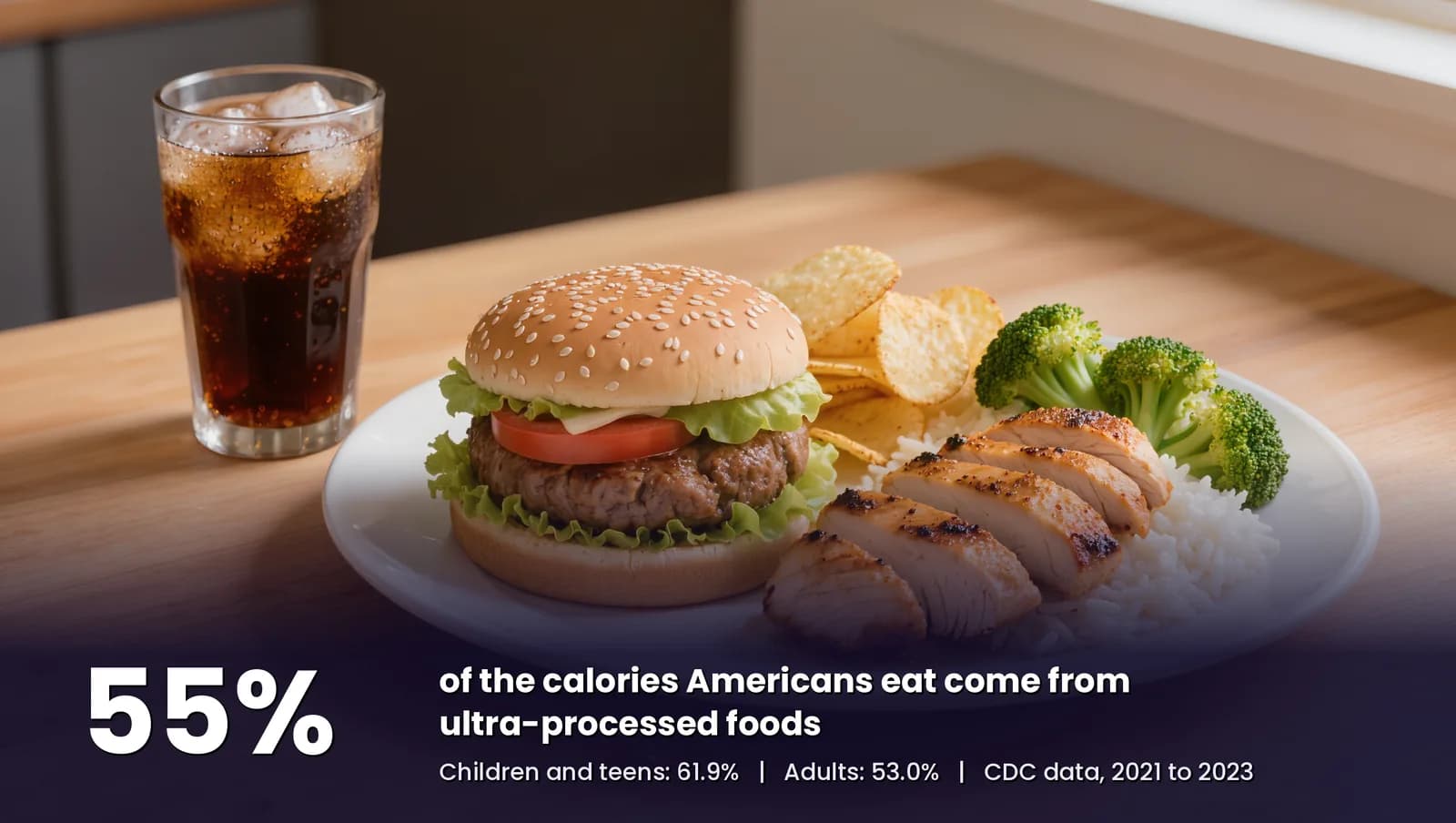
Sandwiches, including burgers, were the top source of ultra-processed calories for both groups, followed by sweet bakery products (Williams et al., 2025). Adults' share dipped from 55.8% in 2013–2014 to 53.0% in 2021–2023 (Williams et al., 2025).
What the Research Says
The FDA and USDA note that researchers have linked eating more ultra-processed food to heart disease, obesity and certain cancers (FDA & USDA, 2025a). Here is what the main studies found, and where they fall short.
A tightly controlled NIH study. In 2019, 20 adults lived at the NIH Clinical Center and ate an ultra-processed diet for two weeks and an unprocessed diet for two weeks, in random order (Hall et al., 2019). The meals offered were matched for calories, sugar, salt, fat and fiber, and people could eat as much as they wanted. On the ultra-processed diet they ate about 500 more calories a day, and gained about 2 pounds on average (Hall et al., 2019). We cover this study in more detail in Food Addiction: How Tobacco Companies Engineered Your Food.
A large review of studies. A 2024 BMJ umbrella review of 45 pooled analyses, covering nearly 10 million participants in total, found ultra-processed food intake directly linked to 32 of the health measures studied (Lane et al., 2024). It rated the evidence "convincing" for links to death from cardiovascular disease, type 2 diabetes, anxiety and common mental disorders (Lane et al., 2024). But "convincing" is a statistical label, not proof of cause. On a separate quality scale, most of the evidence was rated low or very low quality, and only four analyses were rated moderate (Lane et al., 2024). The authors note that observational studies can be skewed by other factors and that more randomized trials are needed (Lane et al., 2024).
A 2025 UK trial. 55 adults each ate two 8-week diets, in random order, that both met UK healthy-eating guidance: one minimally processed and one ultra-processed. Fifty were included in the analysis, and the order of the diets affected the results. People lost weight on both diets, but about twice as much on the minimally processed diet: 2.06% vs. 1.05% of body weight, a difference of roughly one percentage point (Dicken et al., 2025). Most participants were women, and the results may not apply to people who already eat little ultra-processed food (Dicken et al., 2025).
Not every ultra-processed food is the same. In one analysis the BMJ review cites, ultra-processed cereals, dark or whole-grain bread and yogurt were linked to lower type 2 diabetes risk (Lane et al., 2024).
The debate. The researchers who created NOVA argued in a 2025 Lancet series that more than 100 studies link ultra-processed diets to harm across nearly all organ systems (Monteiro et al., 2025). Others disagree. When French food and nutrition specialists sorted the same foods into NOVA groups, they often disagreed with each other (Braesco et al., 2022), and some scientists have argued that NOVA offers little advantage over the current epidemiologic approach (Gibney et al., 2017). The UK's nutrition advisers called the links "concerning," but said the evidence was uncertain and almost exclusively observational, and did not change their dietary advice (Scientific Advisory Committee on Nutrition [SACN], 2023, 2025).
How to Spot Ultra-Processed Foods on a Label
Food labels aren't always required to say how a food was processed, so the ingredient list is one of the best clues you have (FDA & USDA, 2025a). NOVA's authors suggest a simple test: check whether the list contains at least one "marker" ingredient (Monteiro et al., 2019a).
- Ingredients you wouldn't cook with at home. Sugars like high-fructose corn syrup, maltodextrin and dextrose; hydrogenated or interesterified oils; and protein isolates such as soy protein isolate and hydrolyzed proteins. These tend to appear near the start or middle of the list (Monteiro et al., 2019b).
- Cosmetic additives. Flavors, flavor enhancers, colors, emulsifiers, artificial sweeteners and thickeners (Monteiro et al., 2019b). These tend to appear at the end, either as a class name like "natural flavors" or with their job in parentheses, such as "monosodium glutamate (flavor enhancer)" (Monteiro et al., 2019b). For more on what that label term hides, see The Truth About "Natural Flavors" on Food Labels.
- Order matters. FDA rules require ingredients to be listed in descending order by weight, so the first ingredient is the one present in the largest amount (Code of Federal Regulations, 2026). Ingredients making up 2% or less can be grouped at the end after a phrase like "Contains 2% or less of" (Code of Federal Regulations, 2026).
Some of these markers are additives we've covered before. See 10 Harmful Food Additives Hiding in Your Pantry for the ones with the most research behind them.
Check the Label Before You Buy
You don't have to wait for Washington to finish its definition. The ingredient list already tells you a lot, and you can learn to read it in a few seconds. We'll update this post when the federal definition is released.
Download the NutraDetective app to scan a barcode and see the additives in your food.
Frequently Asked Questions
A. The most common definition comes from the NOVA system, which describes ultra-processed foods as formulations made mostly from ingredients used only in industry, through a series of industrial processes. There is no official U.S. definition yet.
A. Not yet. The FDA and USDA sent a proposed definition, described as a white paper, to the White House Office of Management and Budget on August 3, 2026. As of October 16, 2026, it was still listed as pending review.
A. From August 2021 to August 2023, ultra-processed foods made up 55% of the calories eaten by Americans age 1 and older, according to the CDC's National Center for Health Statistics.
A. Not necessarily. Studies link higher intake to several health problems, but most of that evidence is observational. Some ultra-processed foods, such as whole-grain breads and yogurt, were linked to lower type 2 diabetes risk in one large analysis.
A. Read the ingredient list. NOVA's authors suggest checking for at least one marker ingredient, such as high-fructose corn syrup, maltodextrin, protein isolates, hydrogenated oils, or additives like flavors, colors and emulsifiers.
A. Common examples include soft drinks, packaged snacks, candy, mass-produced packaged breads, cookies, cakes, sweetened breakfast cereals, nuggets, hot dogs and instant noodles, according to the researchers who created the NOVA system.
A. California's AB 1264, signed October 8, 2025, requires schools to start phasing out "ultraprocessed foods of concern" by July 1, 2029. Starting July 1, 2032, vendors may not offer those foods to schools.
References
Braesco, V., Souchon, I., Sauvant, P., et al. (2022). Ultra-processed foods: How functional is the NOVA system? European Journal of Clinical Nutrition, 76(9), 1245–1253. https://doi.org/10.1038/s41430-022-01099-1
California Legislature. (2025). Assembly Bill No. 1264, Chapter 467, Statutes of 2025. https://leginfo.legislature.ca.gov/faces/billTextClient.xhtml?bill_id=202520260AB1264
Code of Federal Regulations. (2026). Title 21, Section 101.4: Food; designation of ingredients. https://www.ecfr.gov/current/title-21/chapter-I/subchapter-B/part-101/subpart-A/section-101.4
Consumer Brands Association. (2026, August 10). Consumer Brands raises concerns over flawed attempt at defining "ultra-processed" food. https://consumerbrandsassociation.org/press-releases/consumer-brands-raises-concerns-over-flawed-attempt-at-defining-ultra-processed-food/
Dicken, S. J., Jassil, F. C., Brown, A., et al. (2025). Ultraprocessed or minimally processed diets following healthy dietary guidelines on weight and cardiometabolic health: A randomized, crossover trial. Nature Medicine, 31(10), 3297–3308. https://doi.org/10.1038/s41591-025-03842-0
Gibney, M. J., Forde, C. G., Mullally, D., & Gibney, E. R. (2017). Ultra-processed foods in human health: A critical appraisal. American Journal of Clinical Nutrition, 106(3), 717–724. https://doi.org/10.3945/ajcn.117.160440
Greenberg Traurig. (2026, October 13). More than research? Why the coming federal definition of ultra-processed foods matters. https://www.gtlaw.com/en/insights/2026/10/more-than-research-why-the-coming-federal-definition-of-ultra-processed-foods-matters
Hall, K. D., Ayuketah, A., Brychta, R., et al. (2019). Ultra-processed diets cause excess calorie intake and weight gain: An inpatient randomized controlled trial of ad libitum food intake. Cell Metabolism, 30(1), 67–77.e3. https://doi.org/10.1016/j.cmet.2019.05.008
Lane, M. M., Gamage, E., Du, S., et al. (2024). Ultra-processed food exposure and adverse health outcomes: Umbrella review of epidemiological meta-analyses. BMJ, 384, e077310. https://doi.org/10.1136/bmj-2023-077310
Monteiro, C. A., Cannon, G., Levy, R. B., et al. (2019a). Ultra-processed foods: What they are and how to identify them. Public Health Nutrition, 22(5), 936–941. https://doi.org/10.1017/S1368980018003762
Monteiro, C. A., Cannon, G., Lawrence, M., Costa Louzada, M. L., & Pereira Machado, P. (2019b). Ultra-processed foods, diet quality, and health using the NOVA classification system. Food and Agriculture Organization of the United Nations. https://www.fao.org/3/ca5644en/ca5644en.pdf
Monteiro, C. A., Louzada, M. L., Steele-Martinez, E., et al. (2025). Ultra-processed foods and human health: The main thesis and the evidence. The Lancet, 406(10520), 2667–2684. https://doi.org/10.1016/S0140-6736(25)01565-X
Office of Governor Gavin Newsom. (2025, October 8). Governor Newsom signs first-in-the-nation law to ban ultra-processed foods from school lunches. https://www.gov.ca.gov/2025/10/08/governor-newsom-signs-first-in-the-nation-law-to-ban-ultra-processed-foods-from-school-lunches/
Office of Information and Regulatory Affairs. (2026a). Pending EO 12866 regulatory review: White paper: Proposed definition of ultra-processed food (RIN 0910-ZD60). https://www.reginfo.gov/public/do/eoDetails?rrid=1495413
Office of Information and Regulatory Affairs. (2026b). EO 12866 meetings: RIN 0910-ZD60. https://www.reginfo.gov/public/do/eom12866SearchResults?pubId=&rin=0910-ZD60&viewRule=true
Regulations.gov. (2026). Docket FDA-2025-N-1793: Ultra-processed foods; Request for information. https://www.regulations.gov/docket/FDA-2025-N-1793
Scientific Advisory Committee on Nutrition. (2023, July 11). SACN statement on processed foods and health: Summary report. https://www.gov.uk/government/publications/sacn-statement-on-processed-foods-and-health/sacn-statement-on-processed-foods-and-health-summary-report
Scientific Advisory Committee on Nutrition. (2025, April 2). Processed foods and health: SACN's rapid evidence update. https://www.gov.uk/government/publications/processed-foods-and-health-sacns-rapid-evidence-update/processed-foods-and-health-sacns-rapid-evidence-update-summary
U.S. Department of Health and Human Services. (2026a, January 7). Fact sheet: Trump administration resets U.S. nutrition policy, puts real food back at the center of health. https://www.hhs.gov/press-room/fact-sheet-historic-reset-federal-nutrition-policy.html
U.S. Department of Health and Human Services. (2026b, August 10). Secretary Kennedy announces landmark food policy reforms to advance President Trump's MAHA agenda. https://www.hhs.gov/press-room/hhs-announces-ultra-processed-foods-gras-reforms.html
U.S. Food and Drug Administration & U.S. Department of Agriculture. (2025a, July 25). Ultra-processed foods; Request for information. Federal Register, 90, 35305–35309. https://www.govinfo.gov/content/pkg/FR-2025-07-25/html/2025-14089.htm
U.S. Food and Drug Administration & U.S. Department of Agriculture. (2025b, September 19). Ultra-processed foods; Request for information; Extension of comment period. Federal Register, 90, 45229–45230. https://www.govinfo.gov/content/pkg/FR-2025-09-19/html/2025-18169.htm
Williams, A. M., Couch, C. A., Emmerich, S. D., & Ogburn, D. F. (2025, August). Ultra-processed food consumption in youth and adults: United States, August 2021–August 2023 (NCHS Data Brief No. 536). National Center for Health Statistics. https://www.cdc.gov/nchs/products/databriefs/db536.htm