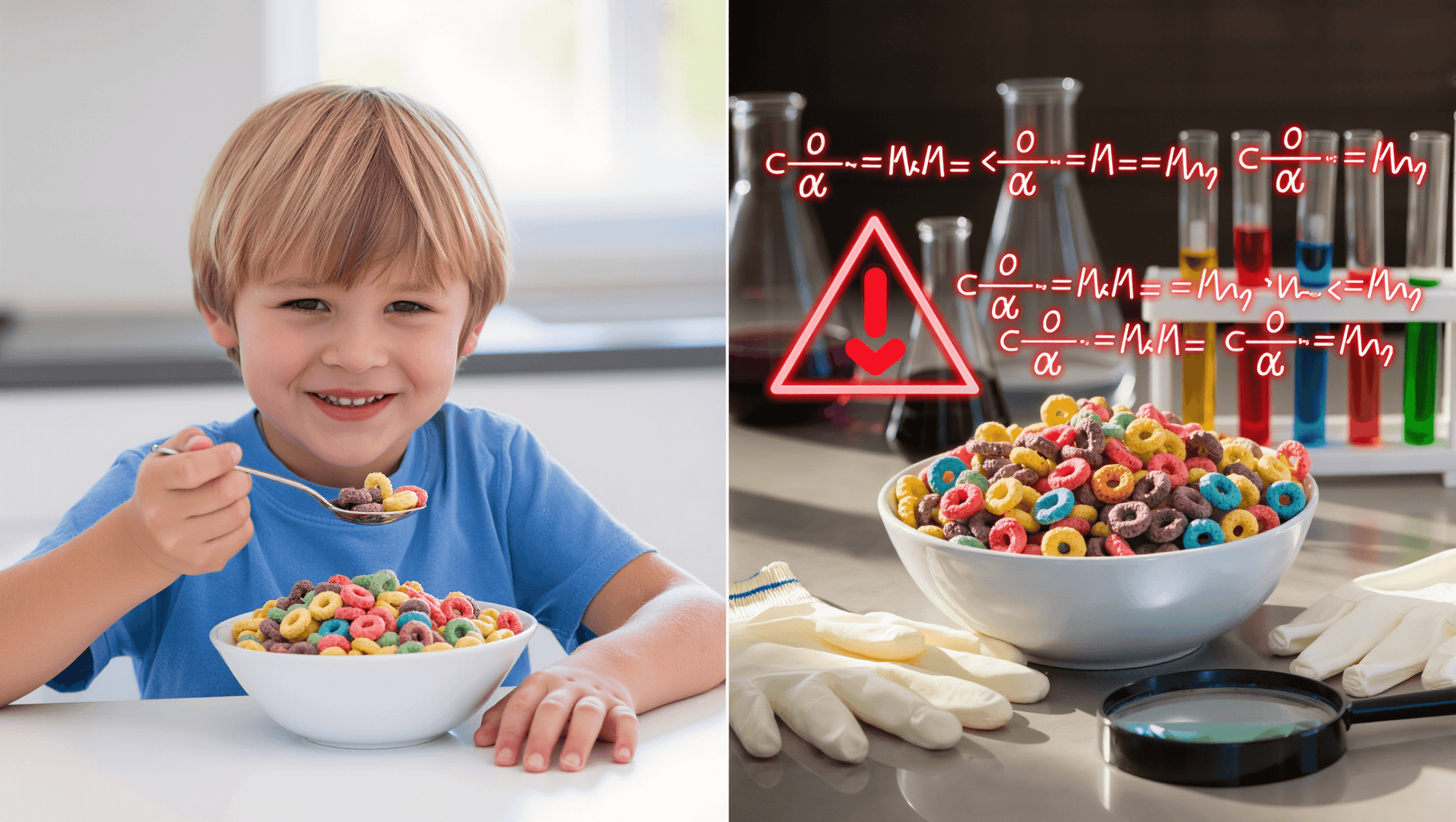
Have you ever noticed your child becomes more restless after eating brightly colored cereal? Or maybe you’re an adult with ADHD who feels more scattered after certain foods? You’re not imagining it.
As we learned more about the connection between food and ADHD, we became passionate about getting this information to families who are struggling. Learn more about our journey in Why We Built NutraDetective. The research was eye-opening—not just that food additives can worsen ADHD symptoms, but that they might actually trigger ADHD-like behavior in children who don’t even have the diagnosis.
According to the CDC, approximately 7 million children aged 3-17 in the United States have been diagnosed with ADHD (Danielson et al., 2024). If removing certain ingredients from your kitchen could help—even a little—wouldn’t you want to know?
Let’s talk about what the science shows.
For a complete overview of harmful additives beyond ADHD, check out our post on 10 Harmful Food Additives Hiding in Your Pantry.
What Are Food Additives and Artificial Dyes?
Before we explore the research, let’s define what we’re discussing.
Food additives are substances added to food to preserve flavor, enhance taste or appearance, or improve texture. This broad category includes preservatives like BHA and BHT, sweeteners such as aspartame, flavor enhancers including MSG, and artificial colors or dyes.
Artificial food dyes are a specific type of food additive. These are petroleum-based chemical compounds used to color food. The most common ones you’ll see are Red 40 (Allura Red), Yellow 5 (Tartrazine), and Yellow 6 (Sunset Yellow).
All artificial food dyes are food additives, but not all food additives are dyes. For this article, we’re focusing primarily on artificial dyes because that’s where the strongest ADHD research exists.
The Science: How Food Additives Affect ADHD
The research reveals two critical findings that every parent and adult with ADHD should understand.
Food Additives Can Trigger ADHD-Like Symptoms
Here’s something that surprised researchers: artificial food dyes don’t just affect children already diagnosed with ADHD. They can cause hyperactivity and attention difficulties in children from the general population (Nigg et al., 2022).
A comprehensive California study reviewed 27 clinical trials and found clear evidence that synthetic food dyes are associated with adverse effects on activity and attention in children—regardless of whether they have an ADHD diagnosis (Nigg et al., 2022). This means your child doesn’t need to have ADHD for food dyes to impact their behavior.
The effects show up in attention tests and parent observations. Children become more impulsive, have trouble focusing, and display increased hyperactivity after consuming these additives.
Food Additives Worsen Existing ADHD
For children who already have ADHD, the impact is even more significant. A major meta-analysis examining 24 studies found that synthetic food colors reliably worsen ADHD symptoms, with parent reports showing consistent behavioral changes after dye consumption (Nigg et al., 2012).
Approximately 30% of children with ADHD show clear improvement when artificial dyes are removed from their diet (Nigg et al., 2012). While most research focuses on children, adults with ADHD may experience similar sensitivity to these additives.
Here’s how it works: these chemicals appear to interfere with neurotransmitters in the brain—the chemical messengers that regulate attention, impulse control, and activity levels (Stevens et al., 2013). The dyes don’t cause ADHD itself, but they can intensify existing symptoms.
Not everyone reacts the same way. Research shows that genetic factors, particularly variations in genes related to histamine metabolism, affect how sensitive someone is to food dyes (Stevens et al., 2013). This explains why some children have dramatic reactions while others seem unaffected.
The Artificial Dyes to Avoid
Based on peer-reviewed research, these are the biggest offenders you need to watch for.
Red 40 (Allura Red)
Red 40 is the most widely used artificial dye in the United States. Studies consistently link it to increased hyperactivity and attention difficulties in children (Nigg et al., 2022). You’ll find it in fruit punch, red candy, strawberry-flavored yogurt, cherry gelatin, and many cereals.
Yellow 5 (Tartrazine)
Yellow 5 ranks as the second most common artificial dye. Research shows it causes behavioral changes in sensitive children, and some studies suggest it may be even more problematic than Red 40 for certain individuals (Arnold et al., 2012). Look for it in lemon-flavored snacks, mac and cheese, chips, sports drinks, and pickles.
Yellow 6 (Sunset Yellow)
Often combined with Yellow 5, this dye triggers similar ADHD symptom increases. It appears in orange soda, orange-flavored candy, cheese-flavored crackers, and many processed baked goods.
The European Response
Here’s something that should concern every parent: the European Union requires warning labels on products containing these dyes stating they “may have an adverse effect on activity and attention in children” (Arnold et al., 2012). American products containing the exact same dyes carry no such warning.
Many food companies actually sell dye-free versions of their products in Europe while continuing to use artificial colors in American versions. The same cereal, the same candy—different ingredients depending on which side of the Atlantic you live on.
A systematic review concluded that avoiding food dyes is one of only two effective non-drug treatments for ADHD symptoms (Sonuga-Barke et al., 2013).
Where These Additives Hide
Artificial dyes show up in products you might not expect, including items marketed as healthy or specifically for children.
Common Sources:
-
Children’s cereals and breakfast foods
-
Fruit snacks, gummies, and candy
-
Flavored yogurts and puddings
-
Sports drinks and fruit punches
-
Colored beverages including sodas
-
Baked goods with bright frosting
-
Mac and cheese (the bright orange kind)
-
Ice cream and frozen treats
-
Vitamins and medications
Many of these products are specifically targeted at children. Nearly 30% of grocery store products marketed to kids contain Red 40 (Nigg et al., 2022).
What You Can Do Today
Knowledge means nothing without action. Here are practical steps you can take right now.
Read Labels Carefully
Flip products over and scan the ingredient list for Red 40, Yellow 5, Yellow 6, Blue 1, Blue 2, and Green 3. If you see “artificial colors” or “FD&C dyes” listed, put it back on the shelf. These vague terms hide the specific dyes we’ve discussed.
Use the NutraDetective App
Scan products instantly with the NutraDetective app before you buy them. The app identifies artificial dyes and food additives, gives you a clear Nutrition Score, and flags ingredients linked to ADHD symptoms.
Choose Natural Alternatives
Look for products colored with fruit and vegetable extracts like beet juice, turmeric, or paprika. These natural colors don’t carry the same behavioral risks. Whole foods are even better because they don’t need added colors at all.
Learn More
The Eden Health Guide offers a complete framework for identifying and eliminating harmful additives through its 7 Pillars approach, including specific guidance on Plant Wisdom—the pillar that addresses ultra-processed foods and synthetic additives. The Guide provides step-by-step strategies for transitioning your family away from additive-laden products without feeling overwhelmed.
Take the First Step
Managing ADHD is challenging enough without hidden ingredients making it harder. Small changes can make real differences. Removing artificial dyes may not cure ADHD, but for many families, it reduces symptom severity.
Whether you’re shopping for your child or yourself, you deserve to know what’s in your food. Start by scanning five products in your pantry today. See what you find. Then make one swap—just one. Replace the most problematic item with a cleaner alternative.
Want to learn more about other harmful additives? Read our complete guide to 10 Harmful Food Additives Hiding in Your Pantry and discover the truth about “Natural Flavors” on Food Labels.
References
Arnold, L. E., Lofthouse, N., & Hurt, E. (2012). Artificial food colors and attention-deficit/hyperactivity symptoms: Conclusions to dye for. Neurotherapeutics, 9(3), 599-609. https://doi.org/10.1007/s13311-012-0133-x
Danielson, M. L., Claussen, A. H., Bitsko, R. H., Katz, S. M., Newsome, K., Blumberg, S. J., Kogan, M. D., & Ghandour, R. (2024). ADHD prevalence among U.S. children and adolescents in 2022: Diagnosis, severity, co-occurring disorders, and treatment. Journal of Clinical Child & Adolescent Psychology, 53(3), 343-360. https://doi.org/10.1080/15374416.2024.2335625
Nigg, J. T., Holton, K., & Arnold, L. E. (2022). Potential impacts of synthetic food dyes on activity and attention in children: A review of the human and animal evidence. Environmental Health, 21(1), Article 45. https://doi.org/10.1186/s12940-022-00849-9
Nigg, J. T., Lewis, K., Edinger, T., & Falk, M. (2012). Meta-analysis of attention-deficit/hyperactivity disorder or attention-deficit/hyperactivity disorder symptoms, restriction diet, and synthetic food color additives. Journal of the American Academy of Child & Adolescent Psychology, 51(1), 86-97. https://doi.org/10.1016/j.jaac.2011.10.015
Sonuga-Barke, E. J., Brandeis, D., Cortese, S., Daley, D., Ferrin, M., Holtmann, M., … & European ADHD Guidelines Group. (2013). Nonpharmacological interventions for ADHD: Systematic review and meta-analyses of randomized controlled trials of dietary and psychological treatments. American Journal of Psychiatry, 170(3), 275-289. https://doi.org/10.1176/appi.ajp.2012.12070991
Stevens, L. J., Kuczek, T., Burgess, J. R., Stochelski, M. A., Arnold, L. E., & Galland, L. (2013). Mechanisms of behavioral, atopic, and other reactions to artificial food colors in children. Nutrition Reviews, 71(5), 268-281. https://doi.org/10.1111/nure.12023
Frequently Asked Questions
A. Food dyes don’t cause ADHD, but research shows they can trigger ADHD-like symptoms in children without the diagnosis and worsen symptoms in children who have ADHD. A California study reviewing 27 clinical trials found clear evidence that synthetic dyes affect activity and attention in children from the general population.
A. The main offenders are Red 40 (Allura Red), Yellow 5 (Tartrazine), Yellow 6 (Sunset Yellow), Blue 1, Blue 2, and Green 3. Red 40 is the most widely used in the US and has the strongest research linking it to hyperactivity and attention difficulties.
A. Approximately 30% of children with ADHD show clear improvement when artificial dyes are removed from their diet, according to a major meta-analysis of 24 studies. Results vary based on genetic factors affecting sensitivity to these additives.
A. The European Union reviewed the same research and concluded warning labels were necessary, stating products “may have an adverse effect on activity and attention in children.” The FDA has not required similar warnings, despite identical scientific evidence being available.
A. Children’s cereals, fruit snacks, gummies, candy, flavored yogurts, sports drinks, fruit punches, mac and cheese, and brightly frosted baked goods contain the highest concentrations. Nearly 30% of grocery products marketed to kids contain Red 40.
A. Look for Red 40, Yellow 5, Yellow 6, Blue 1, Blue 2, Green 3, or vague terms like “artificial colors” and “FD&C dyes.” The NutraDetective app can scan products instantly and flag all ADHD-linked additives automatically.