Fact-checked October 2026.
The can we read has four ingredients. That's the whole list on Ocean Spray Jellied Cranberry Sauce [1].
Picture the moment. The can opener goes around the rim. The sauce slides out in one piece, with the ridges of the can still pressed into it. Someone slices it and sets it on the family Thanksgiving table, next to the turkey.
Before it gets there, let's read the can together. We'll go line by line, from the ingredient list down to the Nutrition Facts panel. Then we'll look at where the cranberries came from.
What Are the Ingredients in Canned Cranberry Sauce?
Here's the ingredient line on the jellied can: cranberries, high fructose corn syrup, corn syrup, water [1]. Four things.
The order matters. By federal rule, ingredients are listed from the most to the least, by weight [3]. So cranberries weigh the most in the can. Water weighs the least. We cover that rule in our guide to ultra-processed foods.
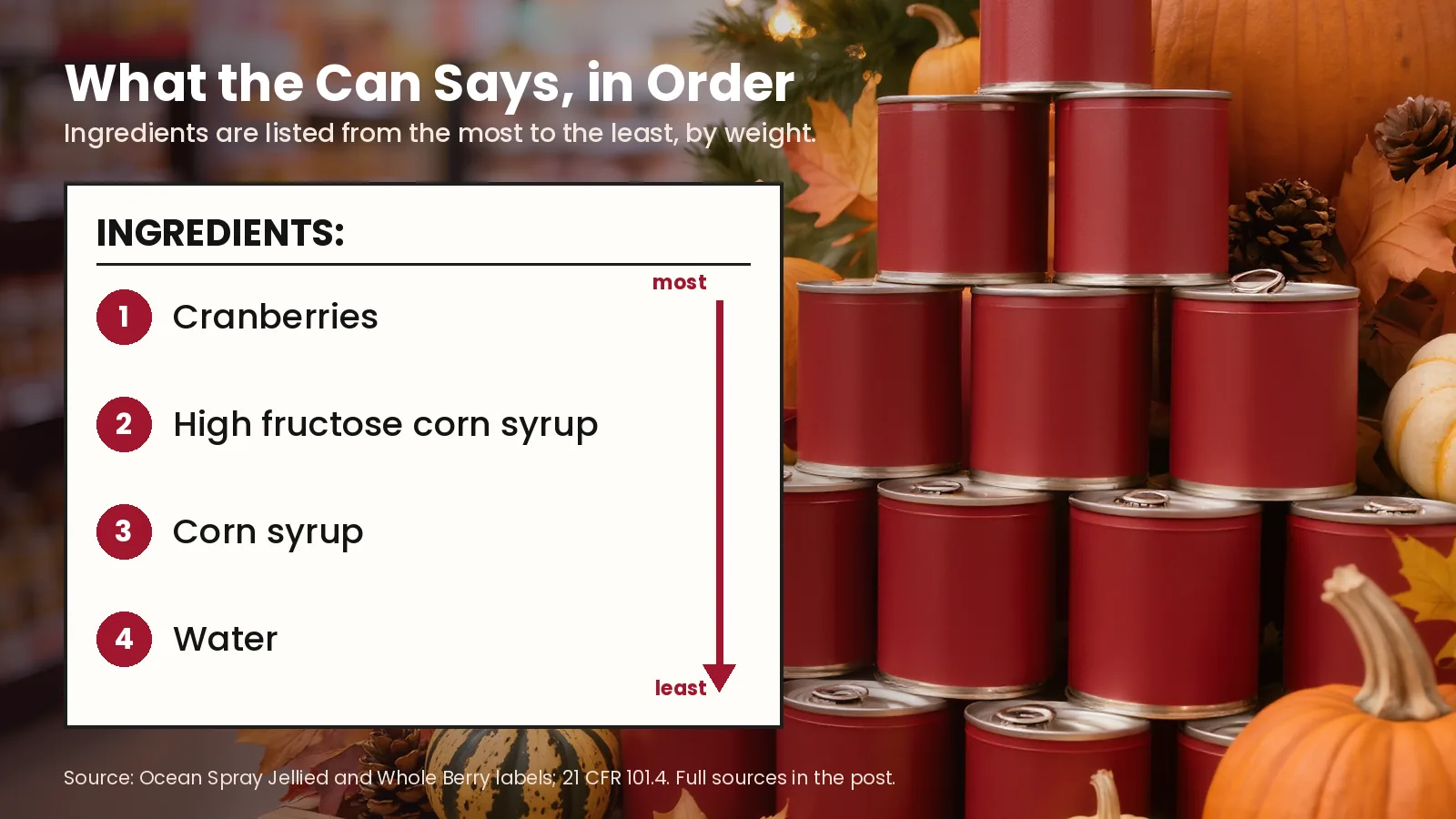
Picture the holiday endcap at the grocery store. Two cans sit side by side, the jellied one and the whole berry one. Turn the whole berry can around. It lists the same four ingredients, in the same order: cranberries, high fructose corn syrup, corn syrup, water [2]. The names differ. The list doesn't.
What Is High Fructose Corn Syrup, the Second Ingredient?
The second line is high fructose corn syrup, or HFCS. It's a sweetener made from corn starch. The FDA says the starch is broken down into glucose, which is corn syrup. Then enzymes change some of that glucose into fructose [4]. Enzymes are proteins that speed up a change. Glucose and fructose are both sugars.
Is it safe? FDA's question-and-answer page was last updated in 2018. It says FDA isn't aware of evidence of a safety difference between HFCS and similar sweeteners, like table sugar or honey. The same page says FDA supports limiting all added sugars, including HFCS [4]. Federal rules list HFCS as GRAS, which means "generally recognized as safe." It can be used with no limit other than good manufacturing practice [5]. That means using only as much as the job needs.
HFCS shows up in a lot of foods, not just this can. We cover it in our guide to harmful food additives. Here, the point is simpler. The second and third ingredients are both sugar syrups.
How Much Sugar Is in Canned Cranberry Sauce?
Now flip the can to the Nutrition Facts panel. The serving is 1/4 cup, and a can holds about 6 servings. One serving of the jellied sauce has 120 calories, 30 g of total carbohydrate, 1 g of fiber and 22 g of total sugars. Of those sugars, 20 g are added sugars. That's 40% of the Daily Value. It also has 10 mg of sodium, 0 g of fat and 0 g of protein [1].
The whole berry sauce is close. Per 1/4 cup, it has 110 calories, 28 g of total carbohydrate and 1 g of fiber. It has 21 g of total sugars and 19 g of added sugars, or 38% of the Daily Value. Sodium is 10 mg [2].
What counts as "added sugars"? The FDA says they're sugars added during processing. They also include sugars from syrups, honey and concentrated fruit or vegetable juices. The sugar that's naturally in fruit doesn't count [6]. So the cranberries' own sugar is in the 22 g of total sugars, but not in the 20 g of added sugars.
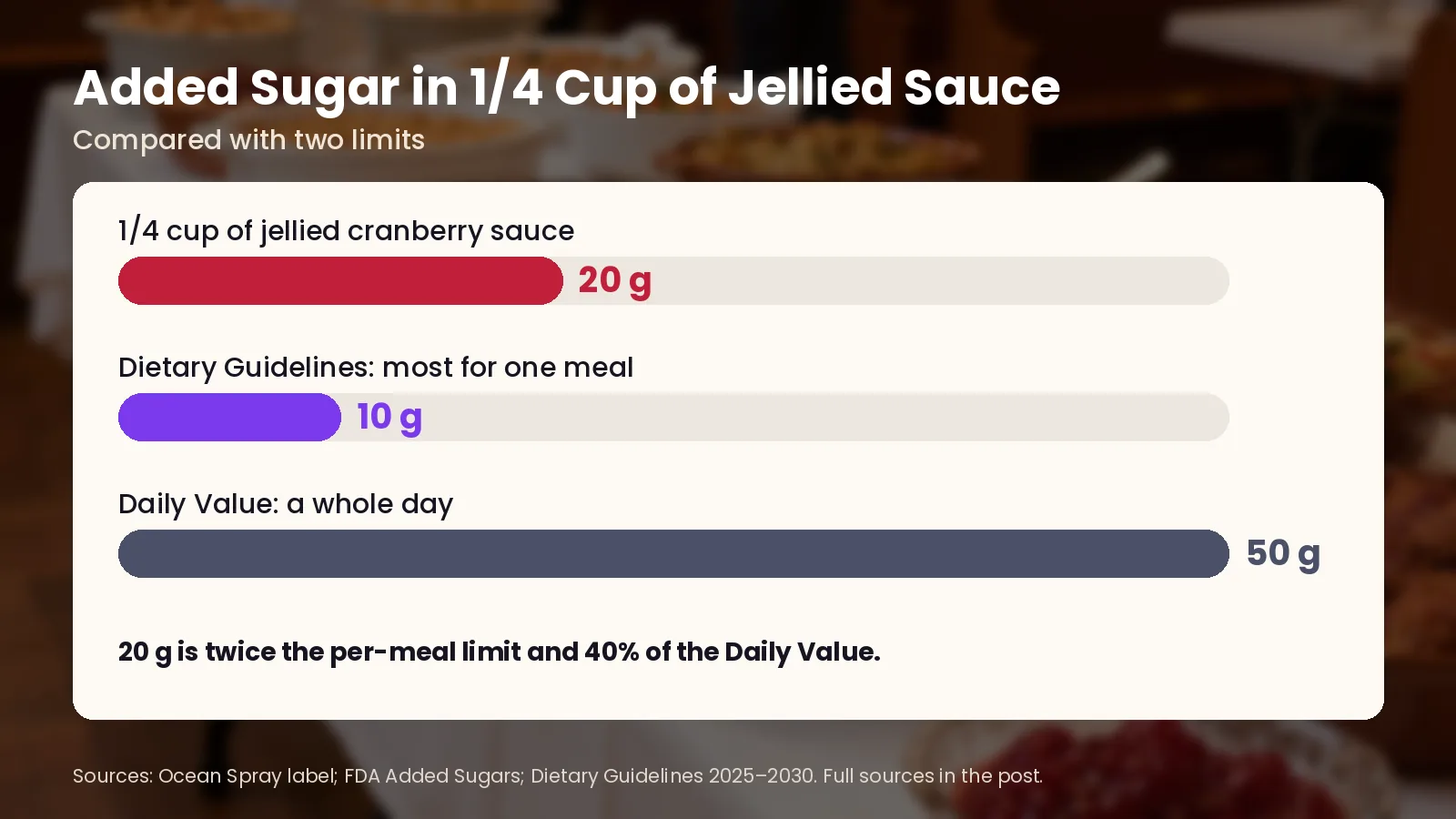
How much is 20 g? The Daily Value for added sugars is 50 g a day, based on a 2,000-calorie diet [6]. So one 1/4 cup serving is 40% of a whole day. The FDA's guide says 5% of the Daily Value or less is low, and 20% or more is high [6]. At 40%, this serving is high.
The 2025–2030 Dietary Guidelines go further. They say no amount of added sugars is recommended. And they say one meal should have no more than 10 g of added sugars [7]. So the 20 g in 1/4 cup of jellied sauce is twice that. Picture a potluck table. The label counts 1/4 cup as one serving. The rest of the plate hasn't been counted yet.
The Guidelines offer two tips. Canned fruits with no or very little added sugar can be good options [7]. And when you read a label, look for ingredients with "sugar" or "syrup" in the name, or ending in "-ose." The Guidelines name high-fructose corn syrup, honey and molasses as examples [7]. On this can, two of the four ingredients have "syrup" in the name.
What Does USDA's Lab Data Say About Canned Cranberry Sauce?
There's a second set of numbers, and it comes from the USDA, not the can. USDA FoodData Central lists "Cranberry sauce, canned, sweetened" in its SR Legacy data. That data was released in April 2018. It was the final release of that data type, and it won't be updated [11].
One thing to know before you read it. The USDA numbers are per 100 grams. The can's numbers are per 1/4 cup. No source we checked gives the weight of 1/4 cup in grams. So we won't convert one into the other, and we won't compare them as if they were the same amount. Read each set on its own.
Per 100 grams, the USDA lists 159 calories, 40.4 g of carbohydrate and 31.8 g of total sugars. It lists 1.1 g of fiber, 0.9 g of protein and 5 mg of sodium [11]. It lists 58.4 g of water [11] and 1 mg of vitamin C [11]. It also breaks the sugars down: 17.4 g of glucose, 9.75 g of fructose, 4.45 g of maltose and 0.1 g of sucrose [11].
Why does the slice hold its shape? Cranberries naturally have a lot of pectin. Pectin is released when the berries cook. It forms a net that traps the dissolved sugar, and that makes the sauce gel. Cook it longer and it gets firmer [10]. Back at the Thanksgiving table, that's why the slice keeps the ridges of the can while the gravy runs.
Where Do the Cranberries Come From?
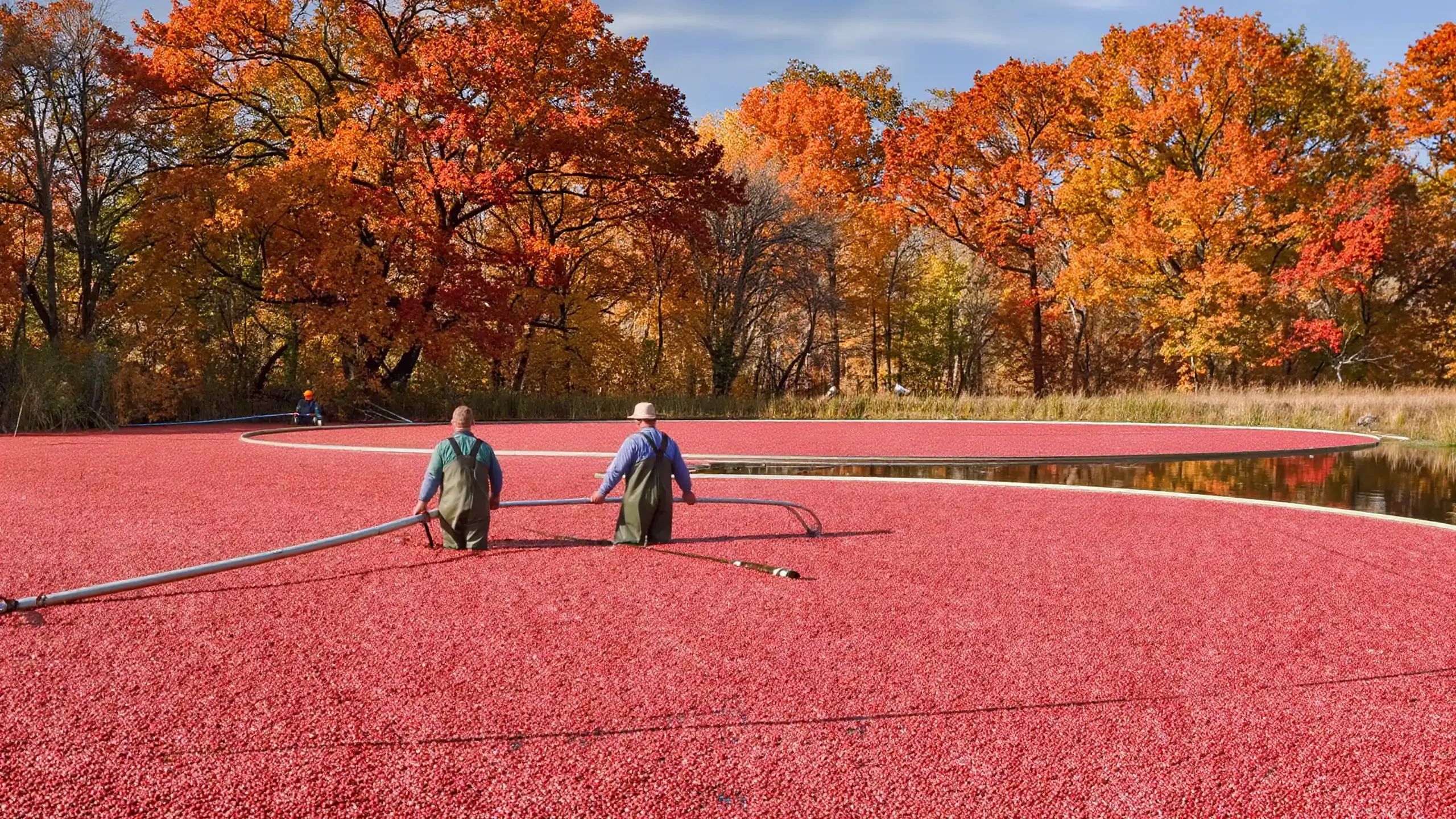
The first ingredient has its own story. The 2025 U.S. cranberry crop was forecast at 8.13 million barrels. A barrel is 100 pounds. That's down 9% from 2024, and close to the 5-year average of 7.95 million barrels [8].
Most of it grows in one state. Wisconsin was forecast at 5.3 million barrels, and it typically grows about 60% of the U.S. crop. Massachusetts was forecast at 1.75 million barrels, down 22% from 2024 because of dry conditions. It typically grows about 25% [8].
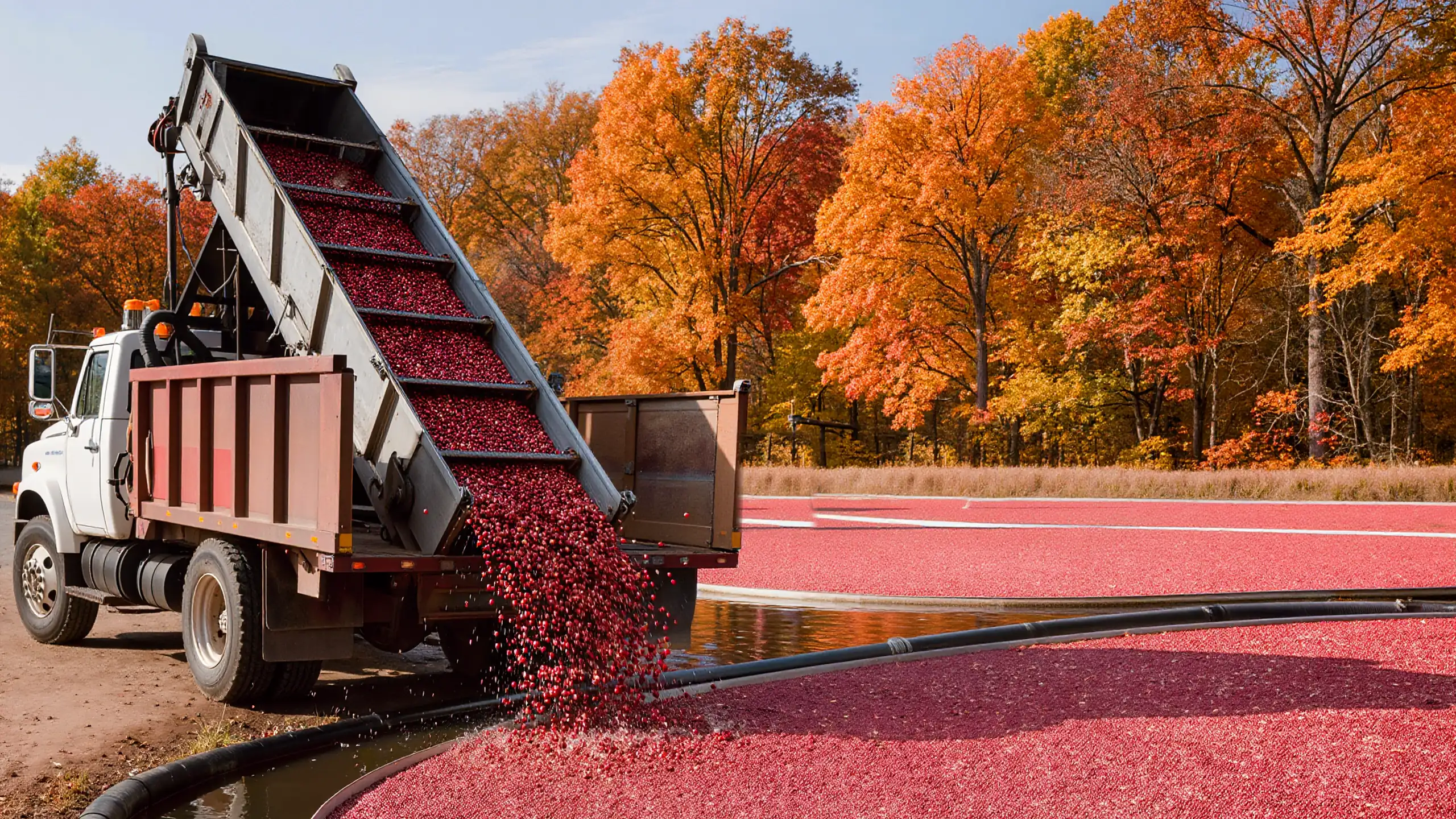
Cranberries are harvested two ways. Dry-harvested fruit goes mainly to the fresh market. Water-harvested fruit is processed [9]. Processed means made into products, like the sauce in this can.
To read the sugars on any can before you buy it, scan it with the free app.
Frequently Asked Questions
A. Ocean Spray Jellied Cranberry Sauce lists four: cranberries, high fructose corn syrup, corn syrup and water. They're listed from the most to the least by weight, as federal rules require.
A. Yes, in the two Ocean Spray cans we read. It's the second ingredient in both the jellied and the whole berry sauce. Corn syrup is the third.
A. One 1/4 cup serving of the jellied sauce has 22 g of total sugars, and 20 g of that is added sugars. The whole berry sauce has 21 g of total sugars and 19 g of added sugars per 1/4 cup.
A. By the FDA's guide, yes. The FDA calls 20% of the Daily Value or more high. One 1/4 cup serving of jellied sauce is 40% of the Daily Value for added sugars. The Dietary Guidelines say one meal should have no more than 10 g of added sugars, and this serving has 20 g.
A. Cranberries naturally contain a lot of pectin, which is released when they cook. The pectin forms a net that traps dissolved sugar, so the sauce gels. Cooking longer makes it firmer.
A. Wisconsin typically grows about 60% of the U.S. crop, and Massachusetts about 25%. The 2025 crop was forecast at 8.13 million barrels, and a barrel is 100 pounds.
A. Yes. Both Ocean Spray cans list cranberries, high fructose corn syrup, corn syrup and water, in that order. Per 1/4 cup, the whole berry sauce has 110 calories and 19 g of added sugars, and the jellied has 120 calories and 20 g.
References
- Ocean Spray Jellied Cranberry Sauce, 14 oz, label as listed by H-E-B (https://www.heb.com/product-detail/ocean-spray-jellied-cranberry-sauce/105925) and Stop & Shop (https://stopandshop.com/groceries/soups-canned-goods/ocean-spray-jellied-cranberry-sauce-14-oz-can.html).
- Ocean Spray Whole Berry Cranberry Sauce, 14 oz, label as listed by Stop & Shop (https://stopandshop.com/groceries/soups-canned-goods/ocean-spray-whole-berry-cranberry-sauce-14-oz-can.html) and H-E-B (https://www.heb.com/product-detail/ocean-spray-whole-cranberry-sauce/105927).
- Code of Federal Regulations. 21 CFR 101.4, Food; designation of ingredients. https://www.ecfr.gov/current/title-21/chapter-I/subchapter-B/part-101/subpart-A/section-101.4
- U.S. Food and Drug Administration. High Fructose Corn Syrup Questions and Answers. Content current as of January 4, 2018. https://www.fda.gov/food/food-additives-petitions/high-fructose-corn-syrup-questions-and-answers
- Code of Federal Regulations. 21 CFR 184.1866, High fructose corn syrup. https://www.ecfr.gov/current/title-21/chapter-I/subchapter-B/part-184/subpart-B/section-184.1866
- U.S. Food and Drug Administration. Added Sugars on the Nutrition Facts Label. Content current as of March 4, 2026. https://www.fda.gov/food/nutrition-facts-label/added-sugars-nutrition-facts-label
- U.S. Department of Agriculture and U.S. Department of Health and Human Services. Dietary Guidelines for Americans, 2025–2030. January 2026. https://cdn.realfood.gov/DGA.pdf
- Wakefield H. Cranberry production forecast to land near five-year average in 2025. USDA Economic Research Service, Charts of Note, November 26, 2025. https://www.ers.usda.gov/data-products/charts-of-note/113512
- DeMoranville C, Sandler H. Cranberry Best Management Practices: Harvest and Post-harvest Management. UMass Extension, 2000. https://www.umass.edu/agriculture-food-environment/sites/ag.umass.edu/files/pdf-doc-ppt/bmp_harvest_and_post-harvest_management_2000.pdf
- Science Buddies. Saucy Science: Comparing Cranberry Condiments. Scientific American, December 1, 2013. https://www.scientificamerican.com/article/bring-science-home-cranberry-sauce/
- USDA Agricultural Research Service. FoodData Central: Cranberry sauce, canned, sweetened (SR Legacy, FDC ID 173961). Published April 1, 2019. https://fdc.nal.usda.gov/food-details/173961/nutrients