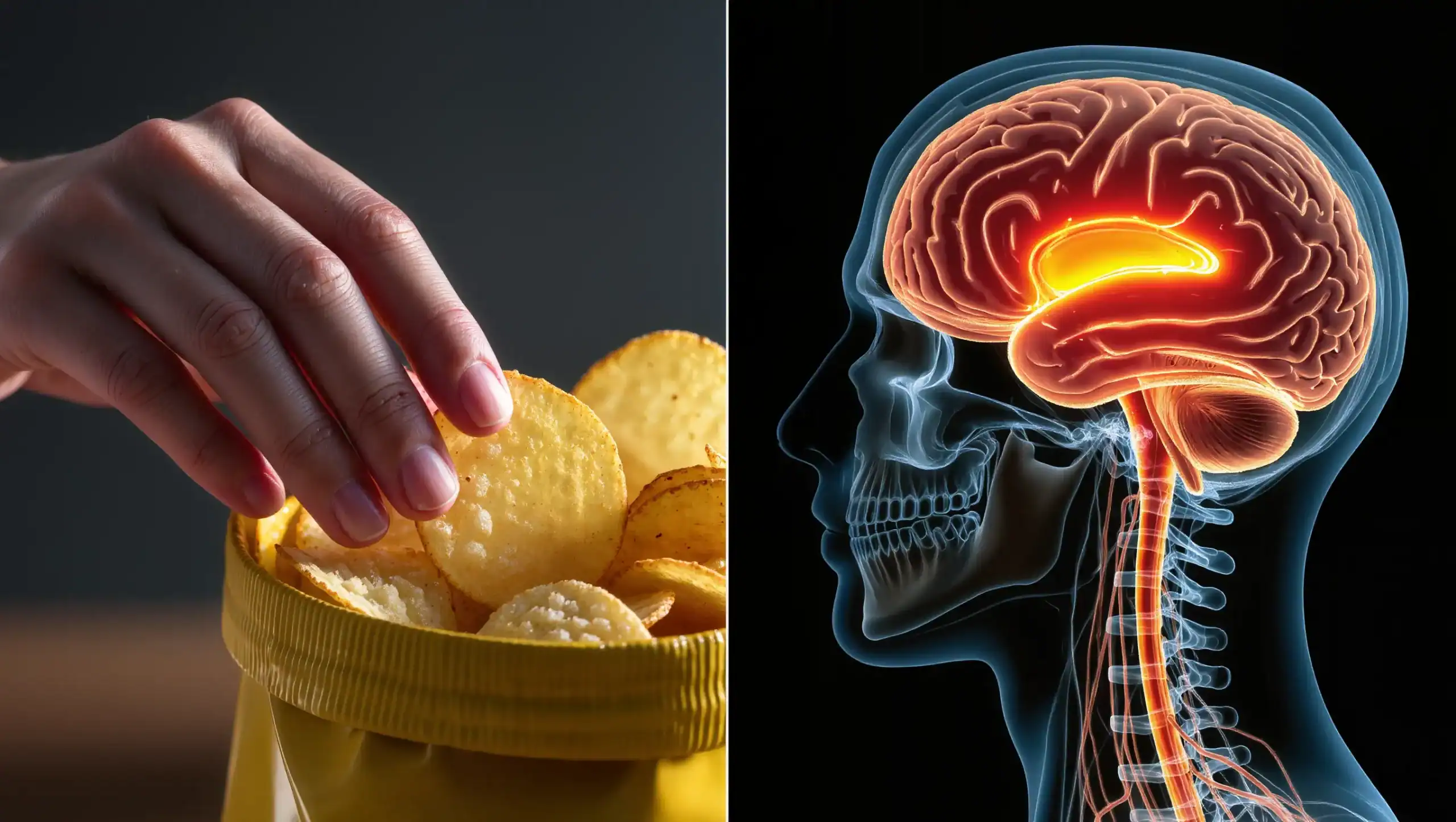
How Cigarette Companies Engineered Your Food to Be Irresistible
Estimated reading time: 17 minutes
🔑 Key Takeaways
- Tobacco companies bought major food brands in the 1980s and made their products up to 80% more addictive using cigarette addiction science.
- Ultra-processed foods cause overeating—NIH research proved people eat 500 extra calories daily on processed diets vs. whole foods.
- 62% of American foods are “hyperpalatable”—engineered with precise fat, sugar, and salt ratios that override your brain’s natural satiety signals.
- The “bliss point” is real—food scientists mathematically calculate the exact combination that makes products irresistible.
- This isn’t willpower failure—your brain is responding exactly as these foods were designed to make it respond.
Table of contents
- How Cigarette Companies Engineered Your Food to Be Irresistible
- Why Can’t You Eat Just One Chip?
- Howard Moskowitz and The Bliss Point Formula
- The Real Breakthrough: Combining Fat and Carbs
- 62% of American Foods Are Hyperpalatable
- Where The Story Gets Darker: Big Tobacco
- The Timeline: Philip Morris Buys Big Food
- The 1999 Minneapolis Meeting
- The NIH Experiment That Changed Everything
- Vanishing Caloric Density: Why Cheetos Trick Your Brain
- The 10 Most Addictive Foods
- Oreos: More Rewarding Than Cocaine?
- This Changes Everything
- Take Action: Scan Before You Eat
- About the Author
- Frequently Asked Questions
- References
In 1987, Philip Morris—the cigarette company—took over Kraft Foods and replaced their executives with tobacco scientists. Within three years, those scientists made their products 80% more addictive than competitors.
This isn’t speculation. We have the internal documents.
The same companies engineering addictive foods also pioneered deceptive labeling. Learn how vague terms hide dangerous ingredients in The Truth About “Natural Flavors” on Food Labels.
By the end of this article, you’ll understand exactly why you can’t stop eating certain foods, who engineered them that way, and what the peer-reviewed science reveals about the playbook they used.
Why Can’t You Eat Just One Chip?
Military research in the 1970s paved the way for the engineering of ultra-processed foods. Scientists working for the military discovered that specific combinations of sugar, fat, and salt trick the brain into eating far more than normal.
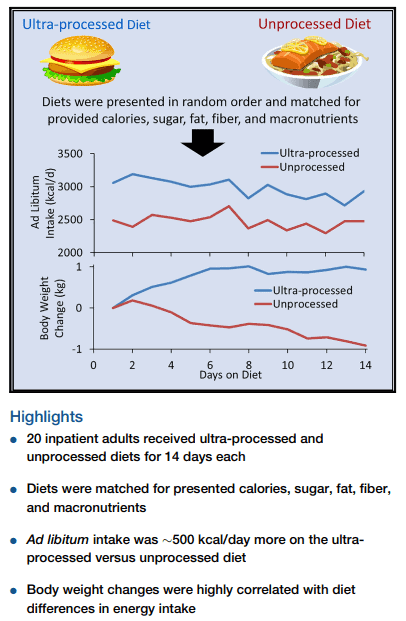
A landmark study was done in 2019 by the National Institutes of Health. In this study, they proved that eating ultra-processed foods can cause people to eat 500 more calories a day than eating unprocessed foods—even though the nutrients, salt, and sugar levels were identical.
I think we just figured out why people go to the gym and still can’t lose weight.
These ultra-processed foods are loaded with harmful additives that go far beyond just making you overeat. Discover the worst offenders in 10 Harmful Food Additives Hiding in Your Pantry.
Howard Moskowitz and The Bliss Point Formula
In 1971, a Harvard-trained psychophysicist named Howard Moskowitz was working at a US Army research laboratory. His mission was simple: optimize food for soldiers in the field.
What he discovered completely changed the food industry forever.
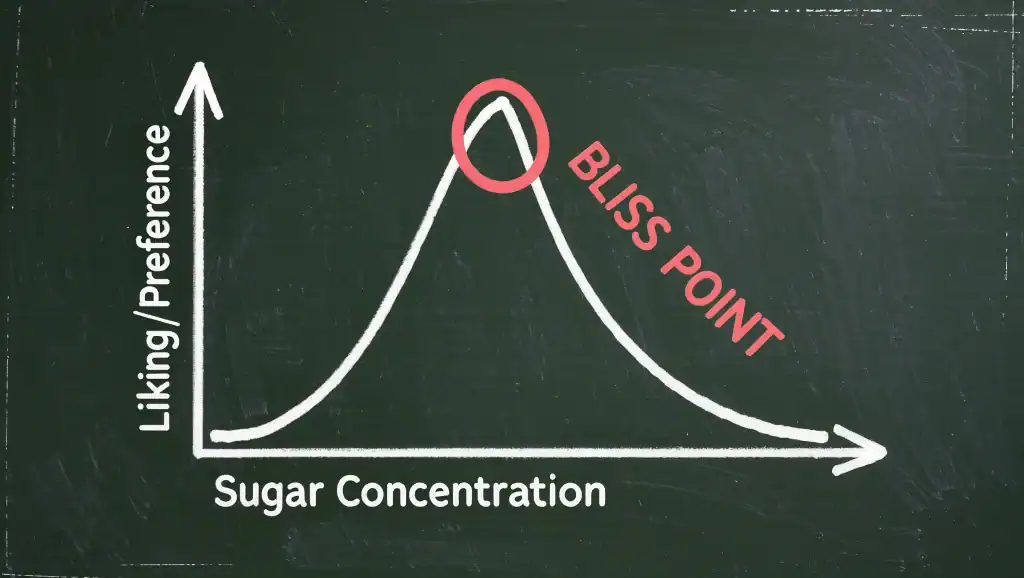
Moskowitz discovered that people’s desire for sugar increased to a certain point and then decreased. He called this the bliss point.
His research, published in the journal Science in 1974, established that humans have optimal preferences not just for sugar, but for salt and fat as well. These aren’t arbitrary preferences—they’re hardwired neurological responses that can be measured, mapped, and exploited.
By the 1980s, every major food company had teams of scientists dedicated to finding the exact bliss points for their products. They tested thousands of formulations, adjusted ratios by fractions of a percent, and used consumer panels to identify the precise moment when a food became irresistible.
But the bliss point was just the beginning.
The Real Breakthrough: Combining Fat and Carbs
In 2018, researchers at Yale University made a shocking discovery. Using brain imaging technology, they found that foods combining fat and carbohydrates produce reward signals in the brain that are exponential.
Dr. Dana Small and her team had participants bid on different foods while their brains were scanned with fMRI. The results were published in the journal Cell Metabolism.
People were willing to pay significantly more for foods that combined fat and carbohydrates than similar foods that were fat-only or carbohydrate-only.
This is called a supra-additive effect.
The brain’s reward centers lit up more intensely when both macronutrients were present together.
Important Fact: This Doesn’t Exist in Nature
In nature, foods rarely combine high fat and high carbohydrates:
-
Nuts are high fat, low carb
-
Fruits are high carb, low fat
Our brains were created with separate reward pathways for each because they signal different nutritional benefits. But ultra-processed foods deceive both pathways at the same time.
Your brain doesn’t know how to regulate this. The reward signal becomes overwhelming.
People in the study were worse at estimating how many calories they were eating when fat and carbohydrates were combined. This was intentional.

62% of American Foods Are Hyperpalatable
In 2019, researcher Tera Fazzino at the University of Kansas established the first quantitative definition of hyperpalatable foods.
When her team applied these research findings to the USDA food database, they found that 62% of foods in the American food supply met the definition of hyperpalatable.
These aren’t random occurrences. These are engineered combinations designed to make people eat more.
Research by Dr. Eric Stice at Stanford found that weight gain over time is associated with reduced striatum response to palatable food. Your brain’s reward system is literally being dulled by repeated exposure.
However, it’s important to note that in January 2025, a study by Dr. Kevin Hall using PET imaging found no significant dopamine response in the striatum after consuming ultra-processed milkshakes. This suggests the mechanisms may be more complex than initially thought, and the field is still working to understand exactly how these foods affect brain chemistry.
What’s clear is that behavioral patterns resembling addiction do occur.
These hyperpalatable foods are also loaded with chemical preservatives to extend shelf life. Learn which ones to avoid in Food Preservatives to Avoid: Safe vs Harmful Guide.
Where The Story Gets Darker: Big Tobacco
Now, here’s where the story gets darker.
In 2023, researchers published a study in the journal Addiction that analyzed documents from the University of California San Francisco Truth Tobacco Industry Documents Library.
What they found was disturbing.
Between 1988 and 2001:
-
Foods owned by tobacco companies were 29% more likely to be fat and sodium hyperpalatable
-
Foods owned by tobacco companies were 80% more likely to be carbohydrate and sodium hyperpalatable
…than foods owned by non-tobacco companies.
The Timeline: Philip Morris Buys Big Food
The timeline is well documented:
| Year | Event |
|---|---|
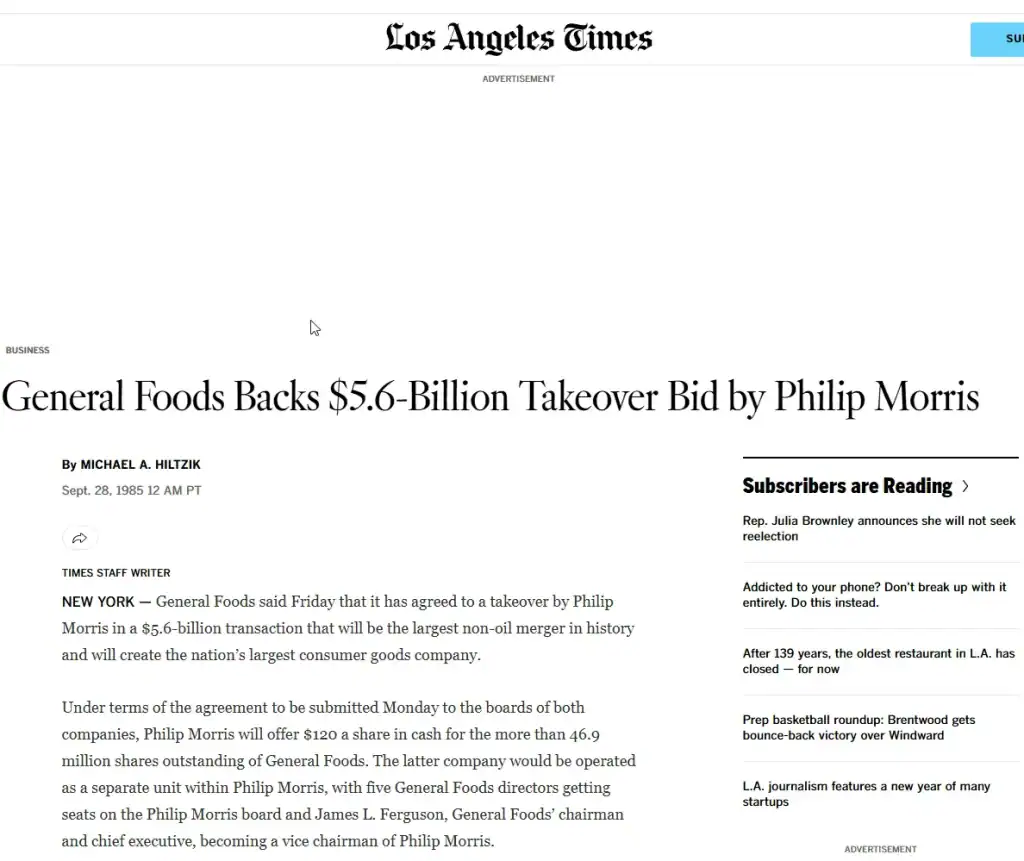
| 1985 | Philip Morris acquired General Foods for $5.7 billion |
| 1987 | They launched the “Corporate Synergy Project,” replacing General Foods executives with personnel from their tobacco divisions |
| 1988 | Philip Morris merged Kraft with General Foods, creating the world’s largest food company with $20 billion in annual revenue |
Internal documents analyzed in the American Journal of Public Health revealed direct transfer of marketing strategies from tobacco to food divisions.
The same companies that spent decades engineering cigarettes to be extremely addictive—while publicly denying the health consequences—were now applying the same tactics to your breakfast cereal.
The 1999 Minneapolis Meeting
Investigative journalist Michael Moss, who won a Pulitzer Prize for his reporting on the food industry, wrote about a 1999 meeting in Minneapolis where food industry executives were warned about the coming obesity epidemic and the role their products played.
The response? Continuing their deceptive tactics—public denial while privately optimizing formulations.
By 2018, 57% of fat and sodium hyperpalatable foods originally introduced by tobacco companies remained prevalent in the American food supply.
The legacy of tobacco companies has simply moved from cigarettes to snack foods.
The NIH Experiment That Changed Everything
For years, the food industry argued that ultra-processed foods weren’t inherently problematic—that obesity was about total calories and personal choices, not the engineering of food.
Then in 2019, Dr. Kevin Hall at the National Institutes of Health conducted a definitive experiment that proved otherwise.
The Study Design:
-
20 adults were admitted to the NIH Clinical Center and housed there for 4 weeks
-
They were randomly assigned to either an ultra-processed diet or an unprocessed diet for 2 weeks, then switched to the other diet
-
Both diets were carefully matched for calories, macronutrients, sugar, sodium, and fiber
-
The only difference was the level of processing
-
Participants were allowed to eat as much or as little as they wanted
-
Every bite was weighed and recorded
The Results (Published in Cell Metabolism):
On the ultra-processed diet:
-
Participants consumed an average of 508 extra calories per day
-
They gained 2 pounds in 2 weeks
On the unprocessed diet:
- They lost 2 pounds
Do the math: At a pound per week, in 10 weeks that’s 10 pounds. Imagine that over 52 weeks—a full year.
The increase came from both carbohydrates (an extra 280 calories per day) and fat (an extra 230 calories per day). Participants also ate significantly faster on the ultra-processed diet.
🔍 Is Your Pantry Full of Hyperpalatable Foods?
NutraDetective scans any product and reveals hidden addictive ingredients, harmful additives, and engineered formulations designed to make you overeat.
Download NutraDetectiveVanishing Caloric Density: Why Cheetos Trick Your Brain
Hall’s team concluded that ultra-processed foods may be engineered to have supernormal appetitive properties that disrupt gut-brain signaling.
When food dissolves rapidly in your mouth—what food scientists call vanishing caloric density—your brain underestimates how many calories you’ve consumed.
Products like Cheetos exemplify this engineering. They melt on contact, signaling low calories to your brain despite their actual caloric density.
Many of these engineered snacks also contain GMO corn and soy—ingredients in over 70% of processed foods. Learn how to identify them in GMO Foods List: What to Avoid at the Grocery Store.
This study, funded by the NIH with no industry conflicts, remains the gold standard proof that ultra-processed foods cause overconsumption through their formulation—not just their availability.
The 10 Most Addictive Foods
So which foods are the most addictive?
In 2015, researchers at the University of Michigan conducted a study with 504 participants to identify which foods triggered the most addiction-like eating behaviors. The results, published in PLOS ONE, ranked foods based on how difficult people found them to stop eating.
The Top 10 Most Addictive Foods:
-
Pizza
-
Chocolate
-
Chips
-
Cookies
-
Ice cream
-
French fries
-
Cheeseburgers
-
Non-diet soda
-
Cake
-
Cheese
Notice the pattern:
-
Nine of the 10 are highly processed
-
Nine of the 10 combine high fat with either high sugar or high refined carbohydrates—in exactly the supra-addictive combination identified in the Yale brain imaging research
The study found that processing level was the largest predictor of addiction-like eating, followed by fat content and glycemic load (a measure of how much a serving of food affects your blood sugar).
Diabetics, pay attention.
These same addictive foods often contain artificial colors linked to behavioral issues in children. Learn more in Food Additives That Can Trigger ADHD Symptoms in Children.
🏆 The 10 Most Addictive Foods
- Pizza 🍕
- Chocolate 🍫
- Chips 🥔
- Cookies 🍪
- Ice cream 🍦
- French fries 🍟
- Cheeseburgers 🍔
- Non-diet soda 🥤
- Cake 🎂
- Cheese 🧀
Source: University of Michigan, 2015
Oreos: More Rewarding Than Cocaine?
When researchers analyzed Oreo cookies specifically, studies have shown more active neurons in reward centers of rats’ brains than cocaine.
The formulation reveals the engineering precision. Per 100 grams, Oreos contain:
-
40 grams of sugar
-
20 grams of fat
-
342 mg of sodium
They simultaneously meet multiple hyperpalatable thresholds: fat plus sugar AND carbohydrate plus sodium.
This isn’t food. This is a formula.
This Changes Everything
Understanding this science changes everything.
When you can’t stop eating chips… when you finish a pint of ice cream you meant to save… when you’re thinking about food 20 minutes after a meal…
This isn’t moral failure.
Your brain is responding exactly as it was designed to respond. The problem is that these foods were designed to exploit that response.
Some researchers say we shouldn’t call this addiction because food doesn’t produce the same magnitude of dopamine response as hard drugs. That may be true. But the controlled studies prove something very problematic is going on.
The fact remains:
-
Ultra-processed foods are engineered using neuroscience and food chemistry to maximize consumption
-
They combine macronutrients in ratios that never existed in nature
-
They’re formulated by companies that literally transferred their expertise from making addictive cigarettes
-
They demonstrably cause people to eat 500 extra calories per day
Approximately 75% of American adults are now overweight or obese. The rise matches the explosion of ultra-processed foods in our food supply, which now makes up nearly 60% of the average American diet.
This was not accidental. This was created purposefully.
We built NutraDetective to fight back against this system. Learn our full story in Why We Built NutraDetective: A Food Scanner App for Ingredient Analysis.
Take Action: Scan Before You Eat
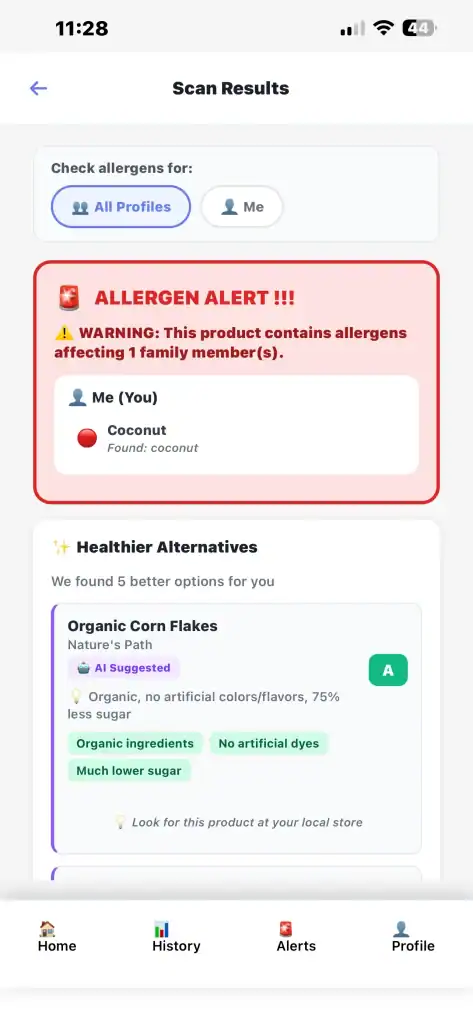
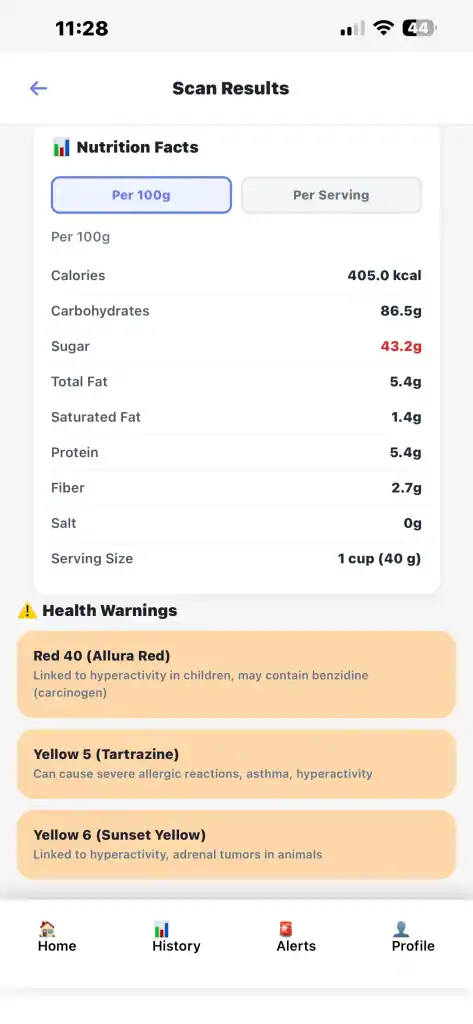
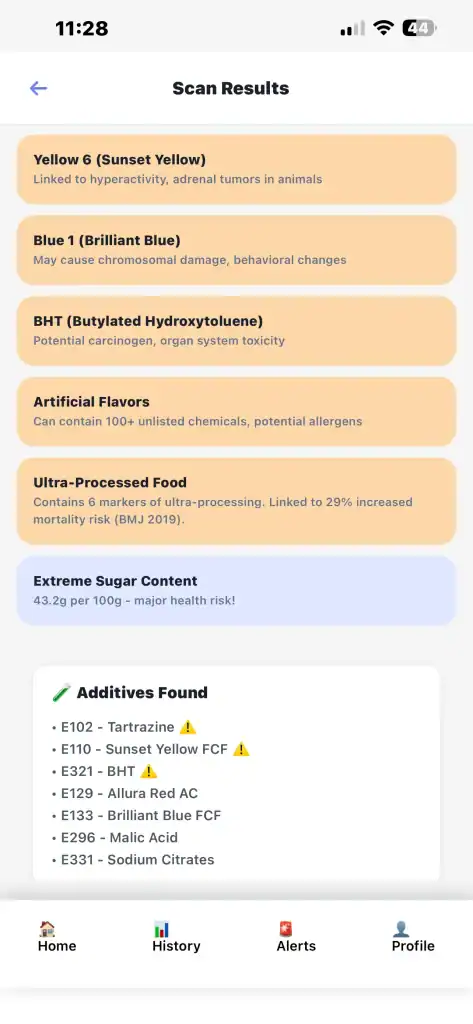
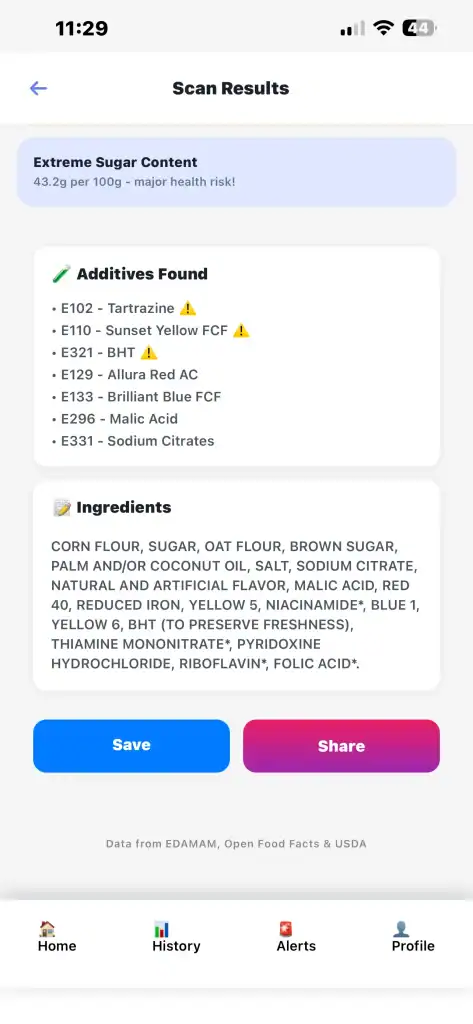
Want to know if the foods in your pantry are hyperpalatable? NutraDetective scans any product and reveals what’s really inside—including ADHD-linked additives, hidden sugars, and engineered combinations designed to make you overeat.



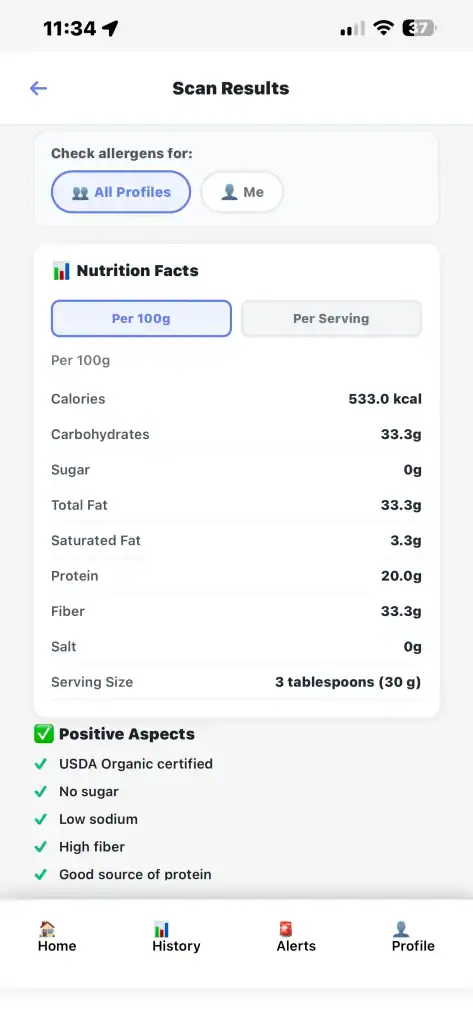
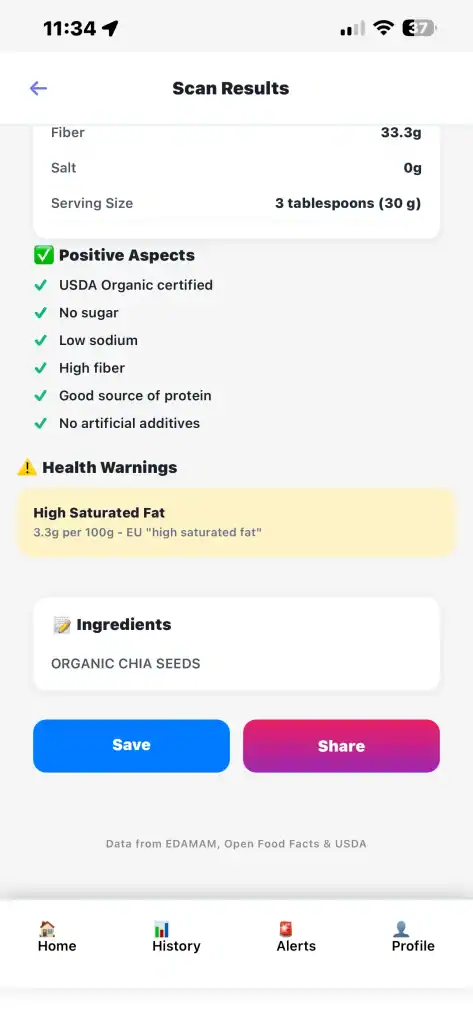
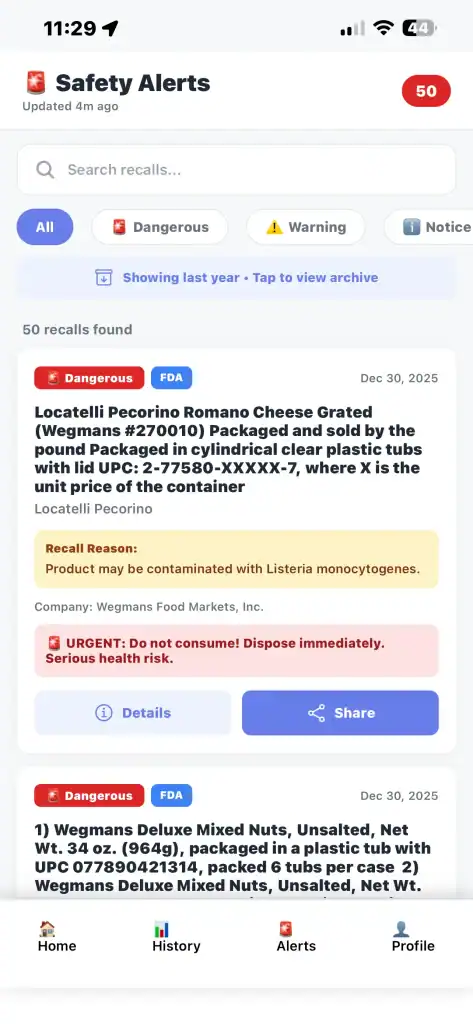

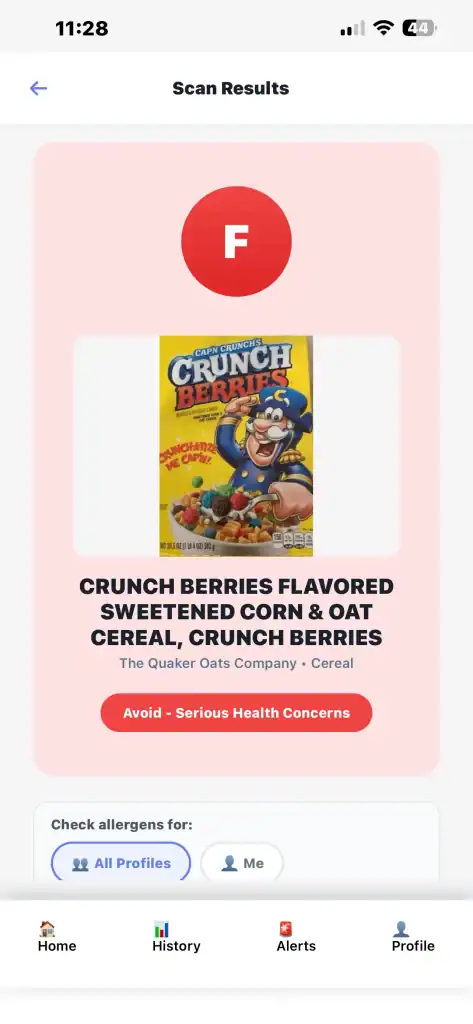
🔍 Uncover What’s Really In Your Food
Stop letting food companies manipulate your brain. NutraDetective gives you instant ingredient analysis, additive warnings, and clear A-F health grades on any product.
About the Author

De Juan Tartt
Founder & CEO, NutraDetective
De Juan Tartt is a food transparency advocate and founder of NutraDetective, a mobile app helping families identify harmful additives in everyday foods. After experiencing unexplained allergic reactions traced to hidden ingredients like industrial citric acid and lactic acid, he spent years researching food additives and the corporations behind them. His mission: expose what’s really in your food and give families the tools to make informed choices.
Frequently Asked Questions
A. Food addiction refers to compulsive eating behaviors triggered by engineered foods that hijack the brain’s reward system. While debate continues about whether it meets clinical addiction criteria, NIH research proves ultra-processed foods cause people to eat 500 extra calories daily—regardless of willpower or nutrition knowledge.
A. The bliss point is the precise combination of sugar, salt, and fat that maximizes a food’s appeal. Discovered by researcher Howard Moskowitz in the 1970s, food companies now use this formula to engineer products that trigger maximum craving and consumption.
A. Philip Morris acquired Kraft and General Foods in the 1980s and transferred over 1,000 tobacco scientists to their food divisions. Research shows foods owned by tobacco companies were 80% more likely to be hyperpalatable than foods from non-tobacco companies.
A. According to research by Dr. Tera Fazzino at the University of Kansas, 62% of foods in the American food supply meet the scientific definition of hyperpalatable—engineered combinations of fat, sugar, and salt designed to override natural satiety signals
A. A University of Michigan study ranked the top 10 most addictive foods: pizza, chocolate, chips, cookies, ice cream, french fries, cheeseburgers, non-diet soda, cake, and cheese. Nine out of ten are highly processed and combine fat with sugar or refined carbohydrates.
A. Ultra-processed foods combine fat and carbohydrates—a combination rare in nature—creating a supra-additive effect that overwhelms the brain’s reward centers. They also use vanishing caloric density, dissolving quickly so your brain underestimates calories consumed.
A. Look for products combining high fat with high sugar or refined carbohydrates, multiple hyperpalatable ingredients, and long lists of additives. The NutraDetective app can scan any product and instantly reveal engineered combinations, harmful additives, and health ratings.
References
-
Hall, K.D. et al. (2019). “Ultra-Processed Diets Cause Excess Calorie Intake and Weight Gain.” Cell Metabolism. https://pubmed.ncbi.nlm.nih.gov/31105044/
-
Moskowitz, H.R. (1974). “Sugar sweetness and pleasantness: evidence for different psychological laws.” Science. https://pubmed.ncbi.nlm.nih.gov/4821960/
-
Small, D.M. et al. (2018). “Supra-Additive Effects of Combining Fat and Carbohydrate on Food Reward.” Cell Metabolism. https://pubmed.ncbi.nlm.nih.gov/29909968/
-
Fazzino, T.L. et al. (2019). “Hyper-Palatable Foods: Development of a Quantitative Definition and Application to the US Food System Database.” Obesity. https://pubmed.ncbi.nlm.nih.gov/31689013/
-
Fazzino, T.L. et al. (2023). “US tobacco companies selectively disseminated hyper-palatable foods into the US food system.” Addiction. https://pubmed.ncbi.nlm.nih.gov/37682074/
-
Gearhardt, A.N. et al. (2015). “Which Foods May Be Addictive? The Roles of Processing, Fat Content, and Glycemic Load.” PLOS ONE. https://pubmed.ncbi.nlm.nih.gov/25692302/
-
UCSF Truth Tobacco Industry Documents Library. https://www.industrydocuments.ucsf.edu/
-
Stice, E. et al. (2010). “Weight Gain Is Associated with Reduced Striatal Response to Palatable Food.” Journal of Neuroscience. https://pubmed.ncbi.nlm.nih.gov/20881128/