The Clean Fifteen Lesson: Learning Before Needing
I’d been buying organic produce for years before I ever heard about the Dirty Dozen or Clean Fifteen.
About five years ago, I discovered the Dirty Dozen. It validated choices I was already making. A year later, I learned about the Clean Fifteen—produce with the lowest pesticide residues where conventional is safe. I filed it away as useful information. Shared it with friends and family. But personally? I didn’t need it. I was already buying organic.
Then we moved to a different area with limited organic options. Sometimes no organic options at all.
That’s when the Clean Fifteen shifted from interesting information to practical tool. I remembered what I’d learned. At least I knew which conventional items were generally safer.
For a complete look at which produce has the MOST pesticides, read our companion guide: The Dirty Dozen: Which Produce to Buy Organic.
The Clean Fifteen gave me a strategy when circumstances changed.
What Is the Clean Fifteen?
The Clean Fifteen represents the produce with the lowest pesticide residues when grown conventionally. These are the items where buying organic makes the least difference for pesticide exposure.
Every year, the Environmental Working Group (EWG) releases this list alongside the Dirty Dozen. They analyze thousands of samples from the U.S. Department of Agriculture’s pesticide testing program. Before testing, the USDA rinses produce under running water and scrubs firm items. They also peel items like bananas and oranges (Temkin et al., 2025).
Almost 60 percent of Clean Fifteen samples had no detectable pesticide residues. When residues were found, they occurred at significantly lower levels than Dirty Dozen produce. Over 75 percent of Dirty Dozen samples contained detectable pesticides (Temkin et al., 2025).
The EWG updates the Clean Fifteen annually based on the latest USDA testing data. Rankings can shift slightly from year to year as growing practices change and testing protocols evolve. But these fifteen items regularly test among the lowest for pesticide contamination.
The Clean Fifteen List
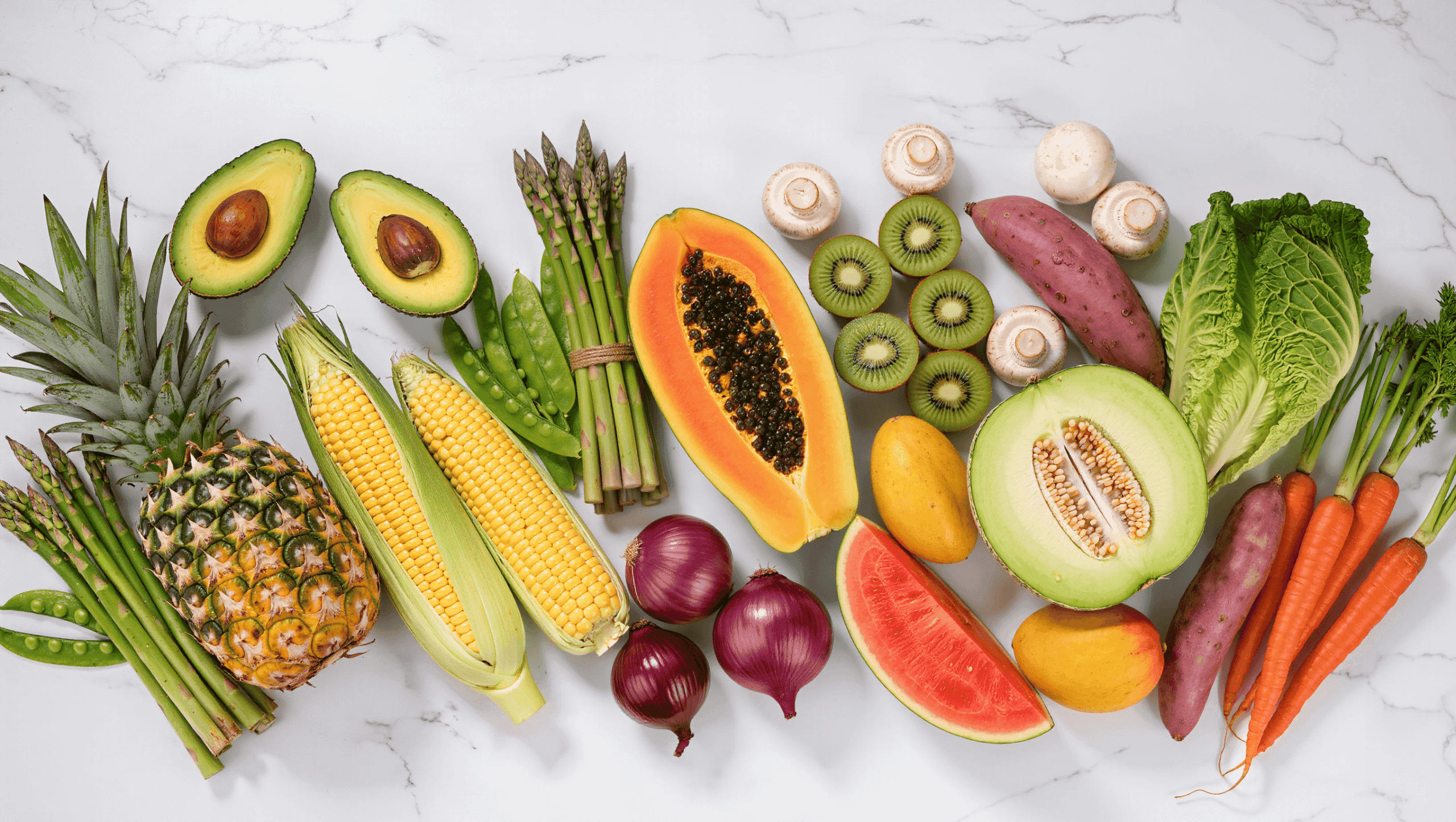
Here’s the current Clean Fifteen list, ranked from lowest to highest pesticide contamination:
-
Avocados – Thick skin provides natural barrier; less than 2% of samples showed any detectable pesticides
-
Sweet Corn – Protective husk shields kernels (but check for GMO if not organic)
-
Pineapple – Tough outer skin prevents pesticide penetration to edible fruit
-
Onions – Multiple protective layers keep pesticides on outer surface
-
Papaya – Thick peel protects flesh (watch for GMO varieties)
-
Sweet Peas (Frozen) – Pod protection plus freezing process reduces residues
-
Asparagus – Grows quickly with minimal pest pressure
-
Honeydew Melon – Thick rind provides barrier
-
Kiwi – Fuzzy skin protects inner fruit
-
Cabbage – Tight outer leaves shield inner layers
-
Mushrooms – Low pesticide use in cultivation
-
Mangoes – Thick skin prevents penetration
-
Sweet Potatoes – Underground growth and thick skin offer protection
-
Watermelon – Thick rind keeps pesticides away from flesh
-
Carrots – While underground, carrots showed low residues in testing
Almost 60 percent of these items had no detectable pesticide residues at all. Even when residues appeared, only 16 percent carried two or more pesticides. Compare that to the Dirty Dozen, where multiple pesticides are common on single samples.
Bananas deserve special mention. They recently joined the list and rank particularly low for overall pesticide toxicity. Since they’re a staple in many children’s diets, this is encouraging news for families watching budgets.
Why These Items Have Lower Pesticide Residues
Certain produce naturally protects itself from pesticide contamination through physical barriers and growing methods.
Thick Protective Peels
tems like avocados, pineapples, and melons feature substantial outer layers you remove before eating. Pesticides applied during growing stay on surfaces you discard. The edible portions inside remain largely unaffected.
Research shows that produce with thicker, inedible skins consistently test lower for pesticide residues in the flesh. The peel acts as a natural shield (Barański et al., 2014).
Underground Growth
Root vegetables like sweet potatoes and carrots grow beneath soil surface. While they can absorb some pesticides through soil, they generally accumulate fewer residues than crops sprayed directly on edible portions.
Natural Pest Resistance
Some crops simply face fewer pest threats. When plants require less chemical intervention during growing, residues remain minimal. Onions and cabbage naturally repel many common pests through their strong compounds.
Processing Benefits
Frozen vegetables like sweet peas undergo washing and blanching before freezing. These processing steps remove additional surface residues beyond what fresh produce receives.
The combination of these factors explains why Clean Fifteen items test so differently from Dirty Dozen produce. It’s not that farmers use fewer pesticides on these crops necessarily—it’s that the pesticides don’t reach the parts you eat.
Strategic Shopping: Dirty Dozen vs. Clean Fifteen
These two lists work as a team. One tells you where to prioritize organic spending. The other shows you where conventional is safer.
The Dirty Dozen includes items like strawberries, spinach, and kale—produce with the highest pesticide residues. For these twelve items, organic makes a measurable difference in pesticide exposure. If you’re going to spend extra money anywhere, spend it here.
The Clean Fifteen gives you permission to save money without compromising safety. Avocados, pineapples, and sweet corn test consistently low for pesticides whether organic or conventional. Your dollar stretches further when you buy these items conventional.
Understanding what’s in your food goes beyond produce. Learn what manufacturers hide behind vague ingredient labels in The Truth About “Natural Flavors” on Food Labels.
This approach isn’t about perfection. It’s about strategy.
Maybe your budget allows organic for everything. Great. But most families face financial constraints. The combination of both lists lets you reduce pesticide exposure significantly while keeping grocery costs manageable.
Organic produce contains pesticide residues four times less frequently than conventional produce. But that gap narrows dramatically for Clean Fifteen items, where conventional options already test cleaner (Barański et al., 2014). Systematic reviews confirm that organic food consumption provides measurable reductions in pesticide exposure (Bradbury et al., 2020).
Here’s the practical reality: buying organic for the Dirty Dozen while choosing conventional for the Clean Fifteen reduces your pesticide exposure by roughly 80 percent compared to buying all conventional produce. You’ve accomplished most of the benefit at a fraction of the cost.
Your Clean Fifteen Action Plan
Knowledge means nothing without action. Here’s how to start using the Clean Fifteen today.
Print or save the list. Put it on your phone or keep it in your wallet. You need it accessible when you’re standing in the produce section making decisions. Don’t rely on memory—especially when you’re tired or rushed.
Scan your current grocery receipt. Look at what you bought last week. How many Clean Fifteen items did you purchase? Could any of those have been conventional instead of organic? Calculate the potential savings.
Start with three strategic swaps. Maybe you’re buying organic avocados, pineapples, and sweet corn. Switch to conventional versions of those three items. Put the money you save toward organic strawberries and spinach from the Dirty Dozen instead.
Pesticides aren’t the only concern in your food. Discover how Food Additives Can Trigger ADHD Symptoms in Children.
Use the NutraDetective app to scan products while you shop. It instantly shows you ingredient breakdowns and health ratings. No more guessing about what’s actually in your food or standing in aisles trying to read tiny labels.
Combine both lists strategically. For the complete guide on which produce has the highest pesticide residues and needs organic priority, check out our post on the Dirty Dozen.
Learn more about our mission for food transparency in Why We Built NutraDetective: A Food Scanner App for Ingredient Analysis.
The Eden Health Guide provides comprehensive strategies for balancing organic purchases within any budget, including detailed shopping guides and meal planning approaches that make clean eating accessible for every family. Available free at NutraDetective.com.
This isn’t about perfection. It’s about making informed choices when you can and extending yourself grace when you can’t. Every strategic swap reduces pesticide exposure. Every informed decision moves your family toward better health.
References
Barański, M., Średnicka-Tober, D., Volakakis, N., Seal, C., Sanderson, R., Stewart, G. B., Benbrook, C., Biavati, B., Markellou, E., Giotis, C., Kupper, J., Rembialkowska, E., Skwarlo-Sońta, K., & Leifert, C. (2014). Higher antioxidant and lower cadmium concentrations and lower incidence of pesticide residues in organically grown crops: A systematic literature review and meta-analyses. British Journal of Nutrition, 112(5), 794-811. https://doi.org/10.1017/S0007114514001366
Bradbury, K. E., Vitolins, V., & Swanson, K. S. (2020). A systematic review of organic versus conventional food consumption: Is there a measurable benefit on human health? Nutrients, 12(1), 7. https://doi.org/10.3390/nu12010007
Temkin, A. M., et al. (2025). Associations between dietary intake of fruits and vegetables with higher pesticide residues and urinary pesticide biomarkers in the U.S. population. International Journal of Hygiene and Environmental Health, 263.
Frequently Asked Questions
A. The Clean Fifteen is an annual list from the Environmental Working Group (EWG) ranking the fifteen fruits and vegetables with the lowest pesticide residues. These are items where buying conventional instead of organic is a safe, budget-friendly choice because pesticides don’t significantly reach the parts you eat.
A. Clean Fifteen produce typically has thick, inedible peels (like avocados and pineapples), grows underground (like sweet potatoes and carrots), or has natural pest resistance (like onions and cabbage). These physical barriers and growing conditions prevent pesticides from reaching the edible portions.
A. Yes, avocados are the safest conventional produce you can buy. Less than 2% of avocado samples tested by the USDA showed any detectable pesticide residues. Their thick skin provides an excellent natural barrier that keeps pesticides away from the flesh you eat.
A. Yes, always wash all produce before eating—even Clean Fifteen items. While these items have lower pesticide residues, washing removes dirt, bacteria, and any surface contaminants from handling during transportation and display at grocery stores.
A. Yes, sweet corn and papaya on the Clean Fifteen are commonly genetically modified in the United States. If avoiding GMOs is important to you, choose organic versions of these two items specifically. The other Clean Fifteen items are not commonly GMO crops.
A. Families can save hundreds of dollars annually by buying conventional for Clean Fifteen items while prioritizing organic only for the Dirty Dozen. This strategic approach reduces pesticide exposure by roughly 80% compared to buying all conventional—at a fraction of the cost of buying everything organic.
A. The EWG updates the Clean Fifteen annually based on the latest USDA pesticide testing data. Rankings may shift slightly year to year as growing practices evolve, but these fifteen items consistently test among the lowest for pesticide contamination.